

What is Solar Energy?
Solar energy is radiant light and heat emitted by the sun, which can be harnessed and converted into usable forms of power – primarily electricity and thermal energy – through technologies like photovoltaic (PV) panels and solar thermal collectors.
Why Solar Energy Matters Today
Solar energy is a core component of the global shift toward renewable energy. Unlike fossil fuels, which emit greenhouse gases and contribute to climate change, solar power is clean, abundant, and sustainable. Every hour, the sun delivers more energy to the Earth than the entire world consumes in a year – making it the most potent and widely available renewable energy source.
A Brief History of Solar Energy
Although humans have used sunlight for warmth and agriculture for millennia, modern solar technology began in the 19th century with the discovery of the photovoltaic effect. The first practical solar cells emerged in the 1950s, initially used to power satellites. Since then, solar energy adoption has surged, especially over the past two decades, driven by –
- Technological advancements in solar panel efficiency
- Plummeting solar installation costs
- Growing concerns over carbon emissions and energy security
Solar Energy in the Clean Energy Context
Solar energy is classified as a renewable energy source because it relies on sunlight, which is inexhaustible on a human timescale. It plays a critical role in decarbonizing the electricity grid, reducing dependency on coal and gas. Countries worldwide, from Germany to India and the United States, have integrated large-scale solar farms and incentivized residential solar systems to meet sustainability targets.

Key Concepts and Terms
Term | Definition |
|---|---|
Photons | Particles of sunlight that activate electrons in solar cells to produce power |
Photovoltaic (PV) | A method of converting sunlight directly into electricity using solar panels |
Sustainability | The capacity to meet present energy needs without compromising future resources |
Greenhouse Gas | Emissions like CO₂ that trap heat in the atmosphere, reduced by solar usage |
Electricity Grid | The network that delivers electricity from producers to consumers |
Solar energy is the transformation of sunlight into usable power, offering a scalable, low-emission solution to modern energy needs. As the world faces rising energy demands and environmental challenges, understanding solar energy is essential to participating in the transition toward a cleaner and more sustainable future.
How Solar Energy Works

Solar energy works by converting sunlight into usable electricity or heat through two primary technologies – photovoltaic (PV) systems and solar thermal systems. Each system uses different components and processes but relies on solar radiation as the energy source.
Photovoltaic (PV) Systems – Converting Sunlight to Electricity
Photovoltaic systems use solar panels to convert sunlight directly into electricity. These panels are made up of photovoltaic cells, typically crafted from silicon wafers, which generate an electrical current when exposed to solar radiation.
How It Works
- Sunlight hits the solar panel, exciting photons.
- Photons transfer energy to electrons in the silicon cells, generating direct current (DC) electricity.
- An inverter converts the DC into alternating current (AC), which is compatible with the electricity grid and home appliances.
- Charge controllers regulate power to prevent overcharging in systems with batteries.
Core Components of a PV System
Component | Function |
|---|---|
Photovoltaic Cells | Generate DC electricity from sunlight |
Solar Panels | House and protect multiple PV cells |
Inverter | Converts DC to AC electricity |
Charge Controller | Manages battery charging and discharging cycles |
Battery Storage | Stores excess electricity for use when sunlight is unavailable |
Mounting Structure | Supports solar panels at optimal angle for sunlight exposure |
Solar Thermal Systems – Harnessing Heat from the Sun
Solar thermal systems use sunlight to generate heat, which is then used directly or converted into electricity. These systems are particularly effective for water heating, space heating, or industrial processes.
Key Technologies
- Flat-plate collectors – Capture solar heat for domestic water or space heating.
- Evacuated tube collectors – Efficiently retain heat, even in colder climates.
- Concentrated Solar Power (CSP) systems – Use mirrors to focus sunlight onto a central receiver (like a CSP tower) to produce high-temperature heat, which drives a steam turbine to generate electricity.
Solar Thermal Type | Application | Temperature Range |
|---|---|---|
Flat-Plate Collectors | Water heating | Up to 80°C |
Evacuated Tube Collectors | Space and water heating | Up to 150°C |
CSP Systems (e.g., Towers) | Electricity generation (utility-scale) | 300°C to 1,000°C |
PV vs. CSP – Key Differences
Feature | Photovoltaic (PV) | Concentrated Solar Power (CSP) |
|---|---|---|
Energy Type | Direct electricity | Thermal energy converted to electricity |
System Scale | Residential, commercial, utility | Primarily utility-scale |
Storage Compatibility | Uses batteries for storage | Stores heat in molten salt or other media |
Best Use Case | Rooftops, small-scale power generation | Large-scale solar farms in high-irradiance areas |
Integrated Solar Systems – PV + Storage + Smart Controls
Modern solar installations often include battery systems and smart energy management to maximize efficiency and autonomy. These systems allow users to –
- Store solar power during the day and use it at night.
- Monitor energy flow via digital dashboards.
- Reduce grid dependency, especially during outages.
Solar energy systems convert sunlight into electricity or heat using photovoltaic cells or thermal collectors. PV systems rely on semiconductors to produce electrical current, while solar thermal systems capture heat for direct use or electricity generation. Both technologies contribute to a diversified, clean energy future and can be scaled from residential rooftops to utility-level solar farms.
Types of Solar Energy Systems
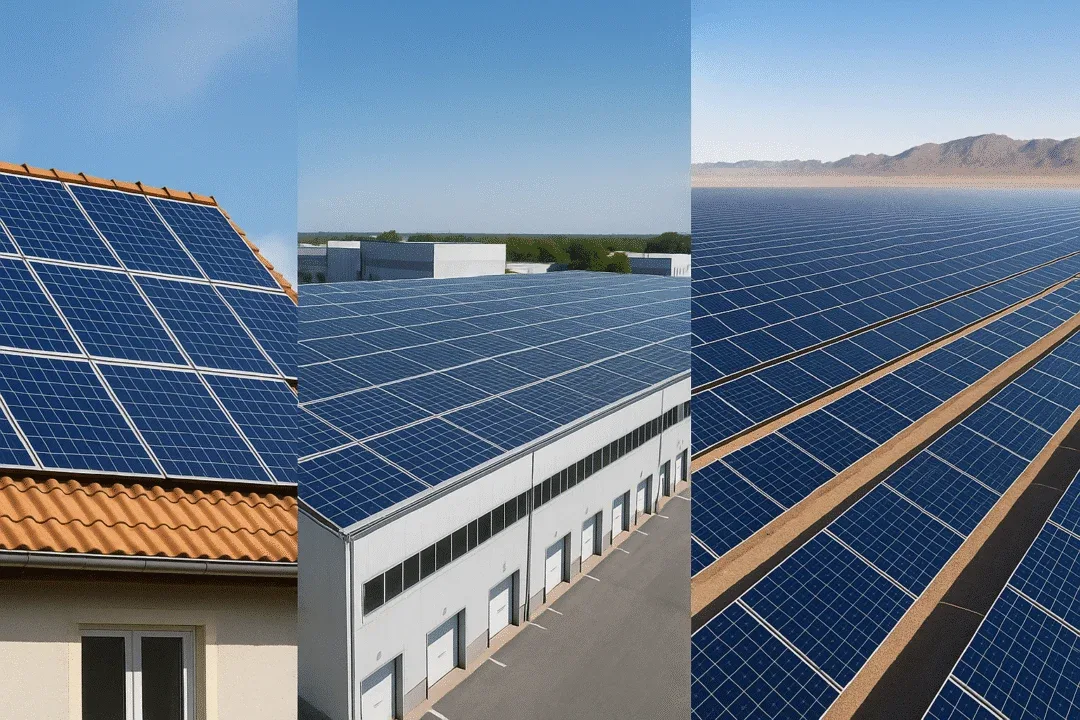
Solar energy systems are categorized by their scale, installation type, and energy use case, ranging from individual home systems to large industrial and utility-scale installations. Each type serves different energy needs and comes with unique benefits, costs, and infrastructure requirements.
Residential Solar Energy Systems
Residential solar systems are designed for single-family homes, typically installed on rooftops or as ground-mounted panels on the property. These systems are usually grid-tied, meaning they are connected to the local electricity grid and may include net metering, which credits homeowners for excess energy sent back to the grid.
Key Features
- System Size – 3-10 kW
- Purpose – Reduce electricity bills, increase energy independence
- Ownership Options – Purchase, solar leasing, or power purchase agreements (PPAs)
- Energy Storage – Optional home batteries (e.g., Tesla Powerwall)
Common Variations –
- Grid-tied solar – Most common, relies on grid backup
- Off-grid systems – Fully independent, require battery storage
- Hybrid systems – Combine solar, battery, and grid access for flexibility
Commercial Solar Energy Systems
Commercial solar systems serve businesses, schools, and government buildings. These installations are larger than residential systems and can be rooftop-mounted, carport-mounted, or installed on adjacent land. Commercial systems often benefit from accelerated depreciation, tax credits, and power purchase agreements.
Key Features
- System Size – 10 kW to several MW
- Purpose – Offset operational energy costs, improve sustainability image
- Financial Models – Direct ownership, PPAs, or solar leasing
- Energy Management – Often integrated with energy monitoring software and building automation systems
Types of Commercial Installations
- Rooftop systems – On office buildings, warehouses, schools
- Ground-mounted systems – For facilities with available land
- Community solar – Shared solar projects for multiple stakeholders
Industrial and Utility-Scale Solar Energy Systems
Industrial and utility-scale solar systems are the largest installations, often covering hundreds of acres. These systems generate energy either for internal industrial use or for feeding into the utility electricity grid to serve thousands of homes and businesses.
Key Features
- System Size – 1 MW to 500+ MW
- Purpose – Large-scale electricity generation
- Technology Used – PV arrays or concentrated solar power (CSP)
- Grid Connection – Always grid-tied; often involve power purchase agreements
Examples
- Utility-scale solar farms – Feed energy into the grid; often located in high solar irradiance areas
- Industrial solar for manufacturing plants – Reduce carbon footprint and operational costs
Types of Solar Energy Systems
Feature | Residential | Commercial | Industrial/Utility-Scale |
|---|---|---|---|
System Size | 3-10 kW | 10 kW-5 MW | 1 MW-500+ MW |
Installation Type | Rooftop or ground-mounted | Rooftop, ground, or carport | Ground-mounted (solar farms) |
Grid Connection | Grid-tied, off-grid, hybrid | Grid-tied, sometimes hybrid | Grid-tied only |
Primary Users | Homeowners | Businesses, schools, governments | Utilities, industrial facilities |
Financing Options | Purchase, lease, PPA | Lease, PPA, tax incentives | PPAs, investment funds |
Net Metering Eligible | Yes | Yes | No (sells power to grid instead) |
Special Models & Programs
- Net Metering – Allows homeowners and small businesses to receive energy bill credits for excess solar power exported to the grid.
- Community Solar – Shared solar installations where multiple users subscribe to receive credits from a central solar farm.
- Power Purchase Agreements (PPAs) – Long-term contracts where a third-party owns and maintains the solar system while the user pays only for the electricity used.
Solar energy systems are adaptable across residential, commercial, and industrial applications, each designed to meet specific energy needs, site constraints, and financial models. From home solar installations to utility-scale solar farms, the variety of system types supports the widespread adoption of clean, renewable power across sectors.
Real-World Applications of Solar Energy

Solar energy is actively used across a wide range of sectors, from powering rural villages to enhancing modern transportation systems. Its adaptability, sustainability, and low operational costs make it a critical technology for both developed and developing regions.
Agriculture – Solar-Powered Irrigation and Farming Tools
Solar irrigation systems use solar pumps to extract groundwater or distribute surface water, eliminating the need for diesel or grid electricity. This is especially impactful in remote farming regions with unreliable access to power.
Common Agricultural Uses
- Solar water pumps for irrigation
- Solar dryers for preserving crops
- Greenhouse heating via solar thermal systems
Example – In India and sub-Saharan Africa, solar pumps help smallholder farmers irrigate crops during dry seasons, increasing productivity and reducing diesel dependence.
Transportation – Solar-Powered Vehicles and Infrastructure
Solar power is increasingly integrated into transportation, improving efficiency and reducing emissions.
Key Applications
- Solar-powered electric vehicles (EVs) – Use onboard solar panels to extend driving range (e.g., Lightyear 0)
- Solar bus stops and charging stations – Provide off-grid lighting and power for EVs
- Solar aviation projects – Aircraft like Solar Impulse 2 demonstrate solar flight capabilities
Residential and Off-Grid Living
Solar energy is widely used in homes for electricity, heating, and portable power, especially in off-grid or disaster-prone areas.
Common Residential Applications
- Solar water heaters for domestic hot water
- Solar panels for homes (grid-tied or off-grid)
- Solar-powered lighting (e.g., solar lanterns and garden lights)
- Solar chargers for phones and small electronics
Example – Off-grid solar homes in Kenya use a combination of solar panels, batteries, and LED lights to deliver reliable, clean energy without any connection to the national grid.
Commercial and Industrial Applications
Businesses use solar for cost savings, energy independence, and sustainability goals.
Examples
- Solar rooftops on warehouses to offset electricity use
- Solar-powered cold storage in food and pharmaceutical industries
- Solar desalination systems for clean water in arid regions
Desalination powered by solar thermal energy is particularly effective in coastal and water-scarce areas.
Portable and Recreational Use
Solar technology supports mobile and recreational needs, offering clean energy for outdoor activities and emergency use.
Examples
- Solar camping gear – Tents with integrated solar panels, solar flashlights
- Portable solar chargers for phones and GPS devices
- Solar backpacks for charging on the move
These solutions are popular among hikers, travelers, and NGOs working in remote or disaster-affected regions.
Real-World Solar Applications Overview
Sector | Solar Applications |
|---|---|
Agriculture | Solar pumps, solar dryers, greenhouse heating |
Transportation | Solar EVs, solar aviation, charging stations |
Residential | Solar water heaters, rooftop panels, solar lanterns |
Commercial | Rooftop solar, cold storage, solar desalination |
Recreational | Solar camping gear, portable solar chargers, off-grid lighting systems |
Solar energy powers real-world solutions across agriculture, transportation, residential living, and industry. From solar irrigation systems that feed crops to solar water heaters and solar-powered vehicles, its applications continue to expand as technology advances and climate goals intensify.
Benefits of Solar Energy
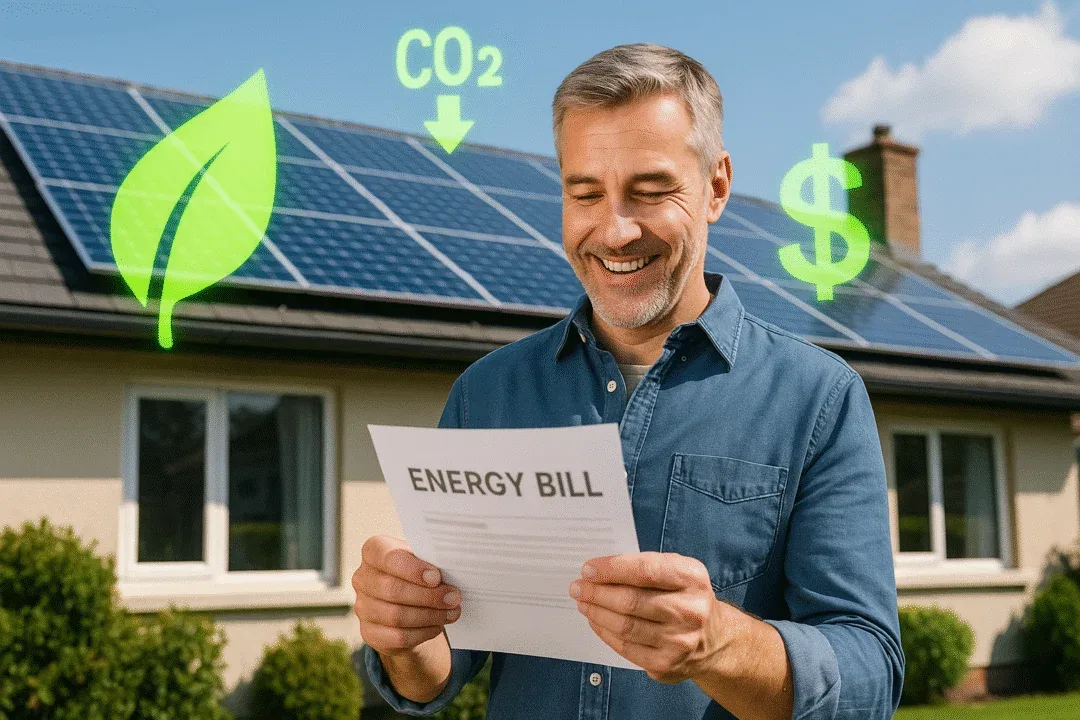
Solar energy offers a wide range of environmental, economic, and social benefits, making it one of the most impactful and scalable renewable energy solutions available today. Whether you’re a homeowner, business, or policymaker, the advantages of solar power extend well beyond electricity generation.
Environmental Benefits
Solar energy significantly reduces greenhouse gas emissions, helping to combat climate change and improve air quality.
Key Environmental Advantages
- Zero emissions during operation – solar panels produce electricity without burning fossil fuels.
- Low carbon footprint – modern photovoltaic systems have an energy payback time of 1-3 years.
- Reduces air and water pollution – unlike coal or natural gas plants, solar does not pollute local ecosystems.
- Supports biodiversity – solar farms can be integrated with pollinator habitats or grazing land.
Example – A typical home solar system reduces CO₂ emissions by 3-4 tons per year, equivalent to planting over 100 trees annually.
Economic Benefits
Solar energy lowers electricity costs, improves long-term return on investment (ROI), and provides financial stability against rising utility prices.
Key Economic Advantages
- Lower energy bills – homeowners save an average of $10,000-$30,000 over the life of a solar system.
- High ROI – most residential systems pay for themselves in 6-10 years, then generate free power.
- Increased property value – solar-equipped homes sell for up to 4% more on average.
- Incentives and tax credits – many regions offer renewable energy incentives, rebates, or net metering programs.
Economic Benefit | Details |
|---|---|
Energy bill reduction | Monthly utility savings begin immediately after installation |
Tax incentives | U.S. Federal Solar Tax Credit covers up to 30% of installation costs |
ROI | Breakeven in 6-10 years, 20-25 years of cost-free energy |
Resale value | Solar homes attract buyers and may sell faster |
Social and Energy Independence Benefits
Solar energy empowers individuals and communities by decentralizing power production, reducing reliance on traditional utilities and fossil fuels.
Key Social Benefits
- Energy independence – rooftop solar allows homes and businesses to generate their own power.
- Decentralized energy access – supports electrification in remote or off-grid areas.
- Job creation – the solar industry employs over 250,000 workers in the U.S. alone.
- Energy equity – community solar programs bring clean energy to underserved populations.
Example – In sub-Saharan Africa, decentralized solar microgrids are providing first-time electricity access to over 600 million people.
Core Benefits of Solar Energy
Category | Key Benefits |
|---|---|
Environmental | Zero emissions, low carbon, reduced pollution |
Economic | Energy savings, tax incentives, increased property value |
Social | Job creation, energy independence, off-grid electrification |
Solar energy delivers long-term, multifaceted benefits – from cutting carbon emissions and lowering energy bills to boosting local economies and expanding energy access. Its ability to deliver clean, cost-effective, and decentralized power makes solar a critical component of a sustainable energy future.
Costs and Financing Options
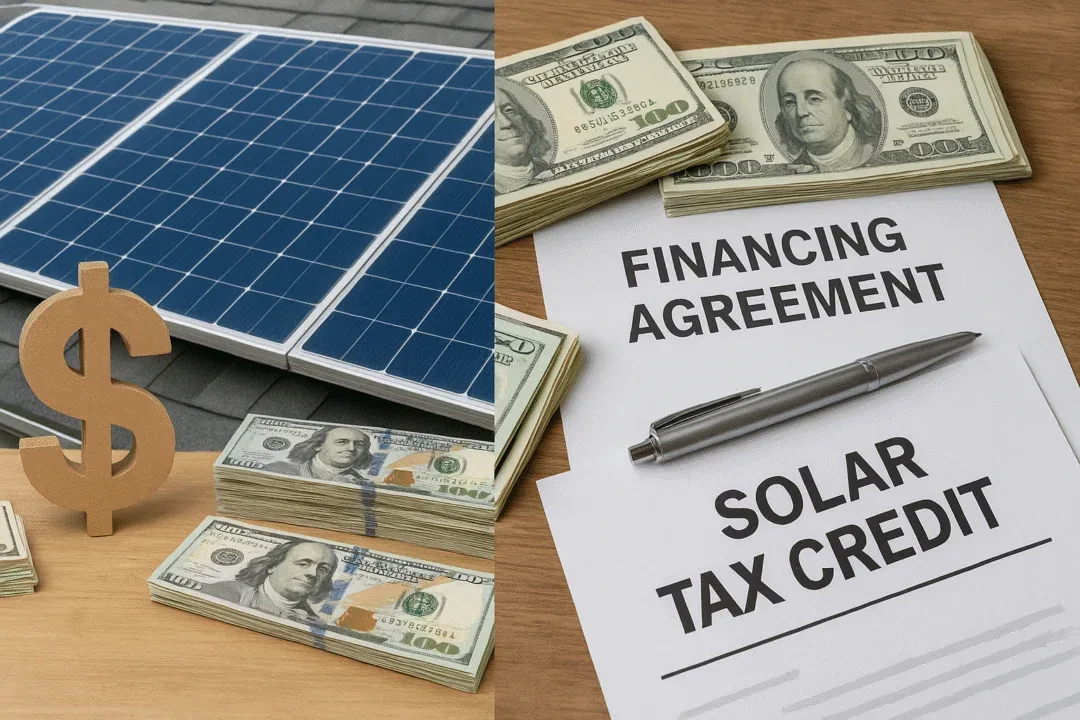
The cost of solar energy involves upfront investment, long-term savings, and multiple financing options, making it accessible to a wide range of homeowners and businesses. Understanding the financial landscape – including incentives, loans, and ROI – is essential when evaluating the true cost of going solar.
How Much Do Solar Panels Cost?
As of 2025, the average cost of a residential solar system in the U.S. is $2.50-$3.50 per watt, before incentives. For a typical 6 kW system, this results in a total cost of $15,000-$21,000 upfront.
System Size | Pre-Incentive Cost | Post-Incentive Cost (30% ITC) |
|---|---|---|
4 kW | $10,000-$14,000 | $7,000-$9,800 |
6 kW | $15,000-$21,000 | $10,500-$14,700 |
10 kW | $25,000-$35,000 | $17,500-$24,500 |
Note – Prices vary by region, equipment, and installer.
Incentives and Government Programs
Government incentives can reduce solar costs by 30% or more, significantly improving return on investment.
Key Incentives
- Federal Solar Investment Tax Credit (ITC) – Offers a 30% tax credit on installation costs (valid through 2032).
- State and local rebates – Some states (e.g., California, New York, Massachusetts) offer solar rebates and cash incentives.
- Net metering – Credits you for excess power sent to the grid, offsetting future utility bills.
- Solar Renewable Energy Certificates (SRECs) – Earn tradable credits for generating clean energy in select states.
Solar Financing Options
If paying upfront isn’t feasible, several solar financing programs make solar accessible with little to no initial payment.
Financing Option | How It Works | Key Advantage |
|---|---|---|
Solar Loan | Borrow money to purchase system, repay monthly | Own the system, keep incentives |
Solar Lease | Pay a fixed monthly fee to use the system | No upfront cost, low maintenance |
Power Purchase Agreement (PPA) | Pay per kWh of energy the system produces | Predictable energy costs |
Zero-Down Financing | Combines loans or leases with no initial payment | Immediate savings, no cash needed |
Tip – Loans typically offer higher ROI because you retain system ownership and qualify for tax credits.
Payback Period and Return on Investment (ROI)
Most homeowners break even in 6-10 years, depending on energy rates, local incentives, and system performance. After that, solar power effectively becomes free electricity for 15+ more years.
Factors That Affect ROI
- Local electricity rates (higher rates = faster payback)
- Solar irradiance (sunny regions = more output)
- Incentive availability
- System size and quality
- Upfront vs financed installation
Example – A $20,000 system with a 30% tax credit and $1,500/year in savings will break even in 9.3 years.
Long-Term Savings and Ownership Value
Over a 25-30 year lifespan, most systems deliver $15,000 to $50,000 in net savings on electricity bills, depending on location and energy use. Solar ownership also adds property value and shields against future utility rate hikes.
The cost of solar energy depends on system size, location, and financing, but long-term savings consistently outweigh the upfront investment. With government incentives like the 30% solar tax credit, flexible financing options such as solar loans and zero-down PPAs, and average payback periods under a decade, solar has become a financially sound and increasingly popular energy investment.
Challenges and Limitations of Solar Energy
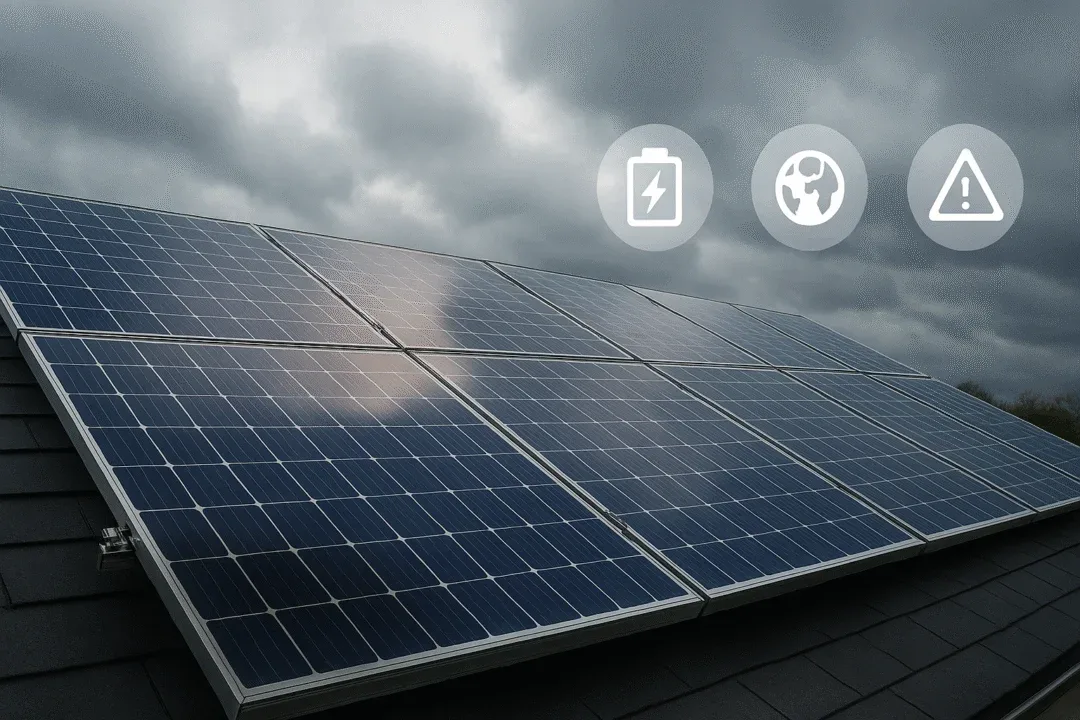
While solar power offers numerous benefits, there are real-world limitations and misconceptions that potential users should understand. These include technical constraints, geographic factors, and financial considerations that may impact solar system performance or adoption.
Intermittency and Weather Dependence
Solar energy is intermittent – it can only generate power when the sun is shining. Cloudy weather, shading, and nighttime conditions all reduce output.
Key Issues
- Cloud cover and rain can lower energy production by 10-25%.
- Nighttime use requires battery storage or grid backup.
- Seasonal variation affects generation, especially in higher latitudes.
Myth – Solar panels don’t work in winter.
Fact – They still produce electricity, just less than in summer.
Energy Storage and Battery Limitations
Because solar power isn’t always available, battery systems are required for off-grid or backup use, but these introduce additional costs and technical limitations.
Challenges
- High battery cost – Lithium-ion batteries can add $10,000-$15,000 to system costs.
- Battery degradation – Most batteries lose capacity over time, with warranties lasting 10-15 years.
- Limited storage capacity – Batteries must be properly sized or supplemented by the grid.
Efficiency and Space Requirements
Solar panels typically convert only 15-22% of sunlight into usable electricity, depending on panel type and installation conditions.
Efficiency Limitations
- Shading from trees or buildings can reduce output by 30% or more.
- Roof orientation and tilt impact generation efficiency.
- Not all roofs qualify due to space, angle, or structural issues.
A typical home needs 300-600 square feet of unshaded rooftop to support a standard 5-8 kW solar system.
Upfront Investment and Payback Period
Despite long-term savings, the initial cost of solar panels remains a barrier for some homeowners, especially without financing or incentives.
Financial Limitations
- High upfront cost without rebates can discourage adoption.
- Long payback period (6-10 years) may deter short-term homeowners.
- Inconsistent incentives between regions affect affordability.
Geographic and Site Constraints
Solar performance varies widely by location due to differences in sunlight hours, local regulations, and grid infrastructure.
Regional Limitations
- Northern or cloudy climates (e.g., Seattle, UK) produce less solar energy.
- Rural or older urban grids may face interconnection delays or limitations.
- Homeowners associations (HOAs) may restrict panel installations.
Common Misconceptions About Solar
Myth | Reality |
|---|---|
Solar panels don’t work in cold weather | They often work better due to improved efficiency in cooler temperatures |
Solar is too expensive for most people | With incentives and financing, costs are more accessible than ever |
Solar power works during a blackout | Only true if paired with battery storage or specific inverter types |
Key Limitations of Solar Energy
Category | Challenges |
|---|---|
Intermittency | Night use, cloudy days, seasonal variability |
Storage | Battery cost, degradation, limited capacity |
Efficiency | Panel conversion limits, shading, roof suitability |
Costs | High upfront investment, payback period |
Geography | Limited solar potential in some regions, grid connection issues |
Misconceptions | Outdated beliefs about cost, performance, or maintenance |
Solar energy has limitations – intermittency, storage costs, and space needs among them – but many of these challenges are solvable or manageable with proper planning. Understanding these drawbacks helps users make informed decisions and avoid common solar myths.
The Future of Solar Energy
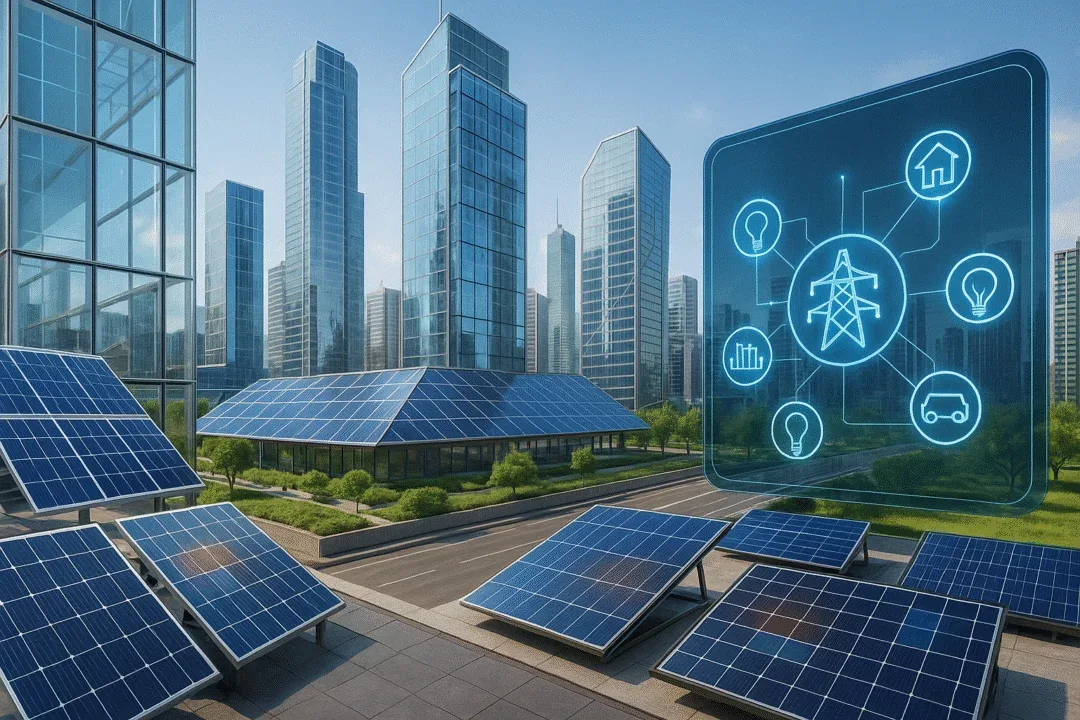
The future of solar energy is defined by rapid technological innovation, global policy support, and a growing share in the world’s energy mix. As material science, artificial intelligence, and smart grid technologies evolve, solar power is set to become even more efficient, accessible, and foundational to the global energy transition.
Emerging Technologies in Solar Energy
Next-generation materials and manufacturing methods are revolutionizing solar panel design, pushing beyond traditional silicon cells.
Key Innovations
- Perovskite solar cells – Lightweight, low-cost materials that promise higher efficiency (up to 30%) with lower production costs.
- Bifacial solar panels – Capture sunlight from both sides, increasing energy yield by 10-20%.
- Solar glass and transparent PV – Windows and surfaces that generate electricity while functioning as architectural elements.
- Nano-solar coatings – Ultra-thin, flexible films for wearable tech, portable solar gear, and curved surfaces.
Smart Grid Integration and AI Optimization
AI and smart grid technologies will enhance how solar power is managed, stored, and distributed.
Key Trends
- AI-driven energy forecasting – Improves efficiency by predicting solar output and matching it with demand.
- Smart inverters – Automatically regulate power flow, voltage, and frequency across distributed energy systems.
- Grid-tied storage systems – Seamlessly store excess solar energy for peak use or grid redistribution.
- Demand response integration – Aligns solar production with user behavior and grid needs in real-time.
Global Growth and Solar Capacity Projections
Solar power is the fastest-growing energy source worldwide, and its share in the global energy mix is set to rise sharply.
Global Forecasts
- Global solar capacity is expected to exceed 5,000 GW by 2030, up from just over 1,200 GW in 2022.
- China, India, the U.S., and the EU are leading solar deployment, supported by aggressive climate targets.
- Developing nations are expanding solar access via microgrids, pay-as-you-go solar, and rural electrification projects.
According to the IEA (2024), solar PV will account for 35-50% of global electricity generation in many regions by 2050.
Policy and Investment Momentum
Governments and private investors are accelerating solar adoption through favorable policies and capital support.
Key Policy Drivers
- National climate goals and net-zero targets
- Carbon pricing and emissions trading schemes
- Clean energy tax credits and subsidy programs
- Green finance mechanisms, including solar bonds and ESG-aligned portfolios
In 2024 alone, solar attracted over $380 billion in global investment, more than fossil fuels and nuclear combined.
Sustainability and the Circular Solar Economy
As solar adoption scales, attention is shifting toward recyclability, circularity, and lifecycle efficiency.
Future Considerations
- End-of-life recycling programs for PV panels and batteries
- Low-impact mining for rare earth materials
- Carbon-neutral manufacturing of solar components
What the Future of Solar Looks Like
Trend | Impact on Solar Energy |
|---|---|
Advanced Materials | Higher efficiency, lower cost, more applications |
AI & Smart Grids | Optimized power flow, improved reliability |
Global Expansion | Solar becomes dominant in the global energy mix |
Policy Support | Accelerates adoption and reduces financial barriers |
Circular Economy | Ensures solar remains a sustainable long-term energy solution |
The future of solar energy is bright, fast-moving, and global. From perovskite breakthroughs and bifacial panel tech to smart grid integration and massive global investments, solar power is poised to lead the next wave of the clean energy revolution. With innovations in materials, AI, and policy frameworks, solar energy will play a central role in achieving a carbon-free, equitable, and resilient energy future.
Common questions about solar energy answered
How long do solar panels last?
Most solar panels last 25-30 years, with many continuing to produce electricity at reduced efficiency beyond that. Panels typically come with a 25-year performance warranty, guaranteeing at least 80-85% output by the end of the term.
What maintenance do solar panels require?
Solar panels require minimal maintenance. Occasional cleaning (1-2 times a year) to remove dust, leaves, or bird droppings is recommended to maintain peak efficiency. Inverters may need replacement after 10-15 years, and batteries, if used, require performance checks and eventual replacement.
Do solar panels work in winter or cloudy weather?
Yes. Solar panels work in winter and on cloudy days, though output is lower compared to sunny summer days. In fact, cooler temperatures improve panel efficiency, and snowfall usually melts quickly due to the panel’s dark surface and tilt.
Is solar energy worth it financially?
Yes, solar is a strong financial investment in most regions with sufficient sunlight and utility costs. With payback periods of 6-10 years and lifetime savings of $15,000-$50,000, solar offers excellent ROI, especially when combined with federal tax credits, state rebates, and net metering.
What is covered under a solar panel warranty?
Most systems include –
- Performance warranty – 25 years (guaranteed efficiency retention)
- Product warranty – 10-25 years (covers manufacturing defects)
- Inverter warranty – 10-15 years (extendable in some models)
- Battery warranty – 5-15 years, depending on cycle life and brand
Do solar panels increase home insurance needs?
Yes, you should inform your insurer. Solar panel systems are typically covered under homeowners insurance, but you may need to adjust your policy coverage to reflect the higher property value and equipment replacement cost.
Can solar be installed on all types of roofs?
Not always. Ideal roofs –
- Face south or west (in the Northern Hemisphere)
- Have minimal shading
- Are in good structural condition
- Have 20+ years of expected lifespan before needing replacement
Flat roofs or non-standard materials may require custom mounting.
What happens at night or during power outages?
- At night, grid-tied systems stop producing power. Homes draw from the utility grid unless battery storage is installed.
- During outages, most grid-tied systems shut down for safety unless paired with hybrid inverters or solar batteries with backup capability.
What is the optimal angle for solar panels?
The best tilt angle is typically equal to your latitude, adjusted slightly for seasonal optimization. For example –
- Summer bias – shallower tilt to capture high sun
- Winter bias – steeper tilt to catch lower sun
Installers use advanced tools to determine the optimal panel angle and orientation for each site.
Is solar energy viable in all climates?
Yes, solar is viable in most climates, including those with frequent rain or snow. While output varies, even countries like Germany and the UK, which have relatively low sun exposure, are global leaders in solar adoption due to supportive policies and efficient system design.
Topic | Quick Answer |
|---|---|
Lifespan | 25-30 years |
Maintenance | Minimal; periodic cleaning and inverter/battery checks |
Winter Performance | Yes, though with reduced output |
Financial ROI | Strong, especially with incentives |
Warranty Coverage | 25-year performance, 10-25-year product |
Insurance | May require policy update |
Roof Suitability | Depends on shade, tilt, age, and structure |
Night Use | Requires batteries for off-grid or backup use |
Optimal Angle | Approx. equal to latitude |
Climate Viability | Effective in most regions, even those with less sun |
FAQ’s
What is solar energy?
Solar energy is the radiant light and heat from the sun that is harnessed using technologies like photovoltaic panels and solar thermal systems to produce electricity and heat.
How does solar energy work?
Solar energy works by converting sunlight into electricity using photovoltaic (PV) panels or into heat using solar thermal collectors. PV systems generate direct current (DC), which is converted to alternating current (AC) using an inverter.
What are the main types of solar energy systems?
The main types are residential rooftop systems, commercial solar installations, and industrial or utility-scale solar farms. These can be grid-tied, off-grid, or hybrid systems.
What are common applications of solar energy?
Solar energy is used for irrigation, lighting, transportation, water heating, off-grid power, and more. Applications range from solar pumps and lanterns to EV charging and portable solar gear.
What are the benefits of solar energy?
Solar energy reduces emissions, lowers energy bills, increases property value, creates jobs, and supports energy independence. It’s clean, renewable, and sustainable.
How much do solar panels cost?
Residential solar panel systems typically cost $15,000–$25,000 before incentives. Federal tax credits, state rebates, and financing options can significantly reduce the cost.
What are the limitations of solar energy?
Solar energy is intermittent, requires adequate space and sunlight, and may need battery storage for off-grid or nighttime use. Upfront costs and geographic limitations can also be challenges
What is the future of solar energy?
The future includes advanced materials like perovskite, AI-based grid integration, solar glass, bifacial panels, and massive global expansion. Solar is expected to lead the clean energy transition.
How long do solar panels last?
Most solar panels last 25–30 years and come with warranties guaranteeing performance over that period. Inverters and batteries may need replacement sooner.
References and Sources