

Mangrove biomes are unique and vital ecosystems found along coastlines in tropical and subtropical regions. These fascinating environments are characterised by their dense mangrove forests, which grow in tidal zones where saltwater and freshwater mix.
With their intricate root systems and remarkable ability to thrive in challenging conditions, mangroves play an important role in supporting biodiversity and providing a range of ecosystem services.
- Mangrove forests are essential for maintaining coastal resilience, protecting shorelines from erosion and reducing the impact of storms.
- Their roots create a safe haven for a wide variety of plants and animals, making them hotspots for biodiversity.
- Found in countries such as Indonesia, Brazil, and India, these forests act as natural guardians of coastlines and contribute significantly to habitat preservation.

Geographic Distribution of Mangroves
Mangroves are found in warm, tropical and subtropical regions around the world, thriving along coastlines where saltwater from the sea meets freshwater from rivers. These remarkable ecosystems are spread across more than 120 countries, forming a crucial part of coastal wetlands in areas with specific environmental conditions.
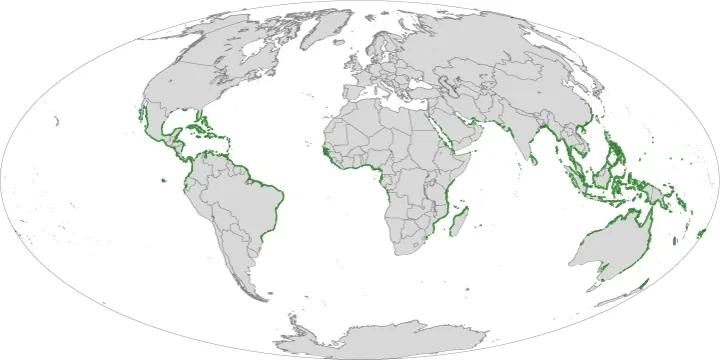
Mangrove Biome Locations Around the World (Image – NASA Earth Observatory)
Key Regions of Mangrove Biomes
The largest mangrove forests are located in Southeast Asia, which is considered the global centre of mangrove biodiversity. Countries like Indonesia, Malaysia, and Thailand host vast mangrove biomes that support rich ecosystems and provide essential resources for local communities.
In South America, Brazil’s mangroves, particularly along the Amazon River Delta, are some of the most extensive in the world. These regions benefit from the tropical climate and nutrient-rich sediments that support mangrove growth.
Africa also has significant mangrove ecosystems, with large forests found in countries like Nigeria, Mozambique, and Madagascar. These mangroves provide essential habitat for wildlife and act as a natural defence against coastal erosion.
Additionally, equatorial regions like the Sundarbans (spanning India and Bangladesh) and the Caribbean islands are home to thriving mangrove habitats. These areas are critical for biodiversity, supporting species that rely on saline environments for survival.
Environmental Conditions for Mangrove Growth
Mangroves thrive in estuarine systems and along tropical coasts where they can tolerate fluctuating salt levels and regular flooding from the tides. Their roots are uniquely adapted to grow in muddy, oxygen-poor soils, making these forests vital for stabilising sediments and protecting shorelines.
Global Importance of Mangroves
The global distribution of mangroves highlights their importance as biodiversity hotspots and providers of vital ecosystem services. Despite their widespread presence, mangroves face threats from deforestation, climate change, and pollution, making conservation efforts critical to their survival.
Unique Features of the Mangrove Biome

Mangroves are remarkable plants with unique traits that allow them to thrive in challenging environments like tidal zones and saline waters. Their special adaptations make them vital to coastal ecosystems, where they protect shorelines and support diverse wildlife.
Salt Tolerance
One of the most important features of mangroves is their ability to tolerate high salt levels in their environment. Mangroves use various methods to manage salt – some, like Avicennia (black mangroves), excrete salt through tiny pores in their leaves, while others, such as Rhizophora (red mangroves), block salt from entering their roots in the first place. This salt filtration system enables them to survive in environments where most plants would perish.
Aerial Roots and Oxygen Exchange
Mangroves have specialised roots that adapt to the waterlogged, oxygen-poor soils of their habitats. Pneumatophores, or aerial roots, stick out of the ground like snorkels to absorb oxygen directly from the air. These roots are common in species like black mangroves. Stilt roots, found in red mangroves, grow above the ground, providing extra stability in loose mud and helping the tree withstand tidal inundation.
Role in Sediment Stabilisation
Mangroves play a key role in sediment trapping and accretion. Their tangled root systems slow down water flow, causing sediments to settle and build up around the roots. This stabilises the soil and prevents coastal erosion, helping protect both the ecosystem and nearby human settlements.
Resilience in Tidal Zones
Mangroves thrive in areas that experience regular flooding. Their ability to grow in the intertidal zone, where the land is submerged and exposed by the tides, demonstrates their remarkable resilience. These trees not only withstand the daily changes in water levels but also create habitats for marine life that rely on tidal conditions.
Importance of Mangrove Traits
The unique adaptations of mangroves – such as salt excretion, oxygen exchange, and sediment trapping – are what make them so crucial to their environment. These traits not only allow mangroves to survive in extreme conditions but also enable them to provide essential ecosystem services, such as stabilising coastlines and supporting biodiversity.
Flora and Fauna of Mangrove Ecosystems

Mangrove ecosystems are home to an incredible variety of plants and animals, each specially adapted to live in the unique conditions of this biome. These biodiversity hotspots support species that thrive in the mix of salty and fresh water, making mangroves vital for both the environment and local communities.
Mangrove Trees
Mangrove trees are the foundation of this ecosystem, with species like Rhizophora (red mangroves) and Avicennia (black mangroves) standing out for their distinctive adaptations. Red mangroves grow with prop roots, which lift the tree above the water, helping it stay stable in soft, muddy soils. Black mangroves, by contrast, have pneumatophores – roots that stick up out of the ground like snorkels to absorb oxygen in waterlogged soils.
These trees not only provide shelter for other organisms but also play a role in filtering salt, stabilising sediments, and producing detritus (decomposing organic matter) that supports the entire food web.
Animal Life
Crabs are some of the most important inhabitants of mangroves. They act as detritus feeders, breaking down fallen leaves and other organic material, which enriches the soil and provides food for other creatures. Mudskippers, fish that can survive both in water and on land, are another fascinating resident. They use their pectoral fins to “walk” on muddy surfaces and can even breathe through their skin when out of water.
Mangroves also serve as important nursery habitats for estuarine fish like snapper and grouper. These fish shelter among the tangled roots as they grow, safe from predators in the open water.
Birds of Mangroves
Mangrove forests are a haven for many migratory birds. Species like herons, egrets, and kingfishers rely on mangroves for food and nesting sites. These birds feed on fish, crabs, and insects, showcasing how mangroves support animals both in the water and on land.
Interconnected Roles
The plants and animals of mangroves depend on one another. The trees provide shelter, food, and oxygen, while the animals contribute to the health of the ecosystem by aerating the soil, breaking down detritus, and keeping the food web in balance.
Mangrove ecosystems are bursting with life, from the towering trees to the tiniest crab. Protecting this diversity ensures the survival of the many species that depend on these habitats – and helps maintain the health of the coastal environment as a whole.
Ecological Importance of Mangroves
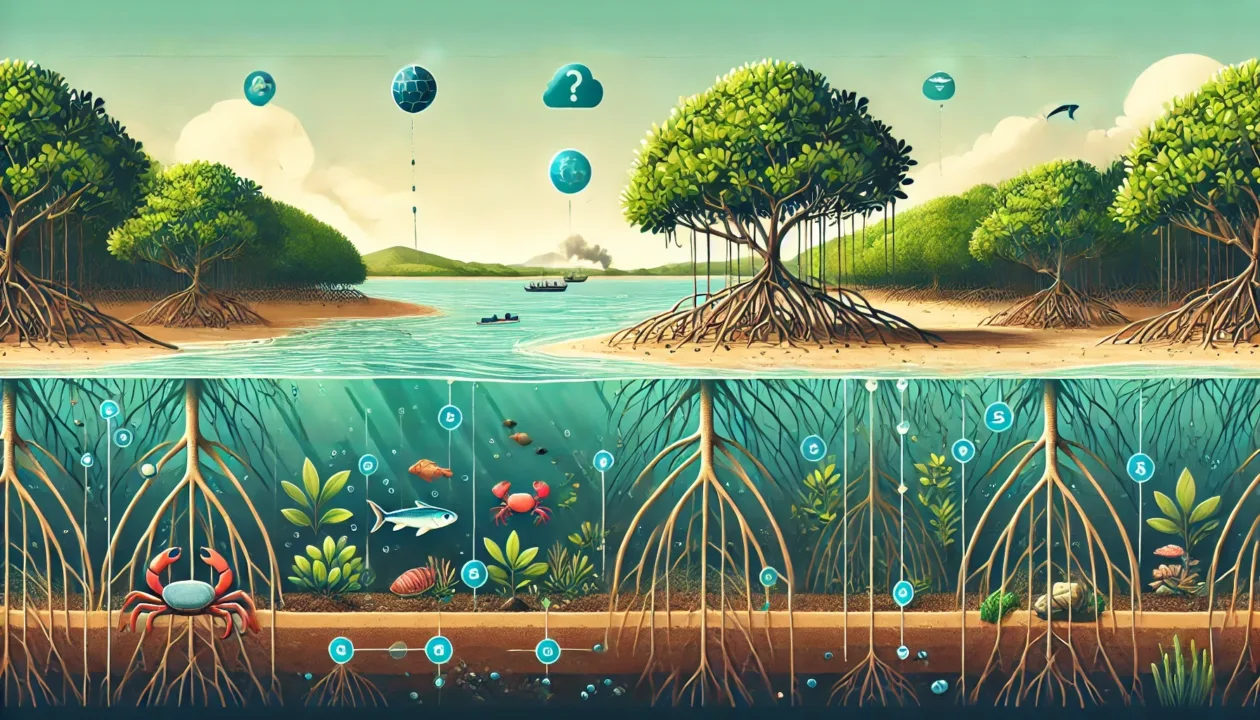
Mangroves are vital for both the environment and human livelihoods, providing a wide range of ecosystem services that benefit people and the planet. These coastal forests contribute to climate regulation, protect shorelines, and support fisheries, making them invaluable to coastal communities and the broader environment.
Carbon Sequestration and Climate Regulation
Mangroves play a critical role in combating climate change by acting as powerful carbon sinks. They store large amounts of blue carbon – carbon captured by ocean and coastal ecosystems – in their roots, trunks, and soil. This helps reduce the amount of carbon dioxide in the atmosphere, making mangroves essential for climate regulation. In fact, mangrove forests can store up to four times more carbon per hectare than rainforests, highlighting their importance in addressing global warming.
Coastal Protection and Erosion Control
Mangroves act as natural shields for coastlines. Their dense root systems stabilise the soil, preventing erosion caused by waves and tides. During storms, mangroves function as storm buffer zones, reducing the impact of strong winds and waves on coastal areas. This wave attenuation helps protect homes, infrastructure, and agricultural land from severe damage.
Fisheries and Livelihood Support
Mangroves serve as nursery habitats for a wide variety of fish, crabs, and shrimp, many of which are vital to commercial and subsistence fisheries. These ecosystems support the livelihoods of millions of people worldwide by providing food and income. Additionally, mangroves are a source of wood, honey, and medicinal plants, further supporting local communities.
Interconnected Ecosystem Services
The benefits of mangroves extend beyond their immediate surroundings. By preventing erosion, they help maintain the health of nearby coral reefs and seagrass beds, which also rely on clear waters. Their ability to store carbon and protect coastlines demonstrates how mangroves safeguard both the environment and human well-being.
Threats to Mangrove Biomes

Mangrove biomes face a variety of serious threats that endanger their survival and the ecosystems they support. From human activities to climate change, these challenges contribute to mangrove degradation and could lead to the loss of these vital coastal habitats if not addressed.
Deforestation and Logging
One of the greatest threats to mangroves is deforestation, often caused by unsustainable practices such as logging. Mangrove wood, prized for its durability, is harvested for timber, fuel, and charcoal. This removes vital trees and disrupts the balance of the ecosystem, leading to habitat loss for many species.
Aquaculture and Coastal Development
Aquaculture, particularly shrimp farming, has destroyed vast areas of mangroves. Coastal development for tourism, urban expansion, and agriculture further contributes to habitat fragmentation, replacing mangroves with roads, buildings, and farmland. These activities disrupt the delicate balance of the mangrove ecosystem and reduce its ability to provide critical ecosystem services.
Climate Change and Sea Level Rise
Climate change poses a significant risk to mangroves through sea level rise and shifting salinity levels. While mangroves are adapted to tidal conditions, rapid sea level rise can overwhelm their ability to grow and keep up, leading to ecosystem collapse. Increased temperatures and changing rainfall patterns further stress these already fragile environments.
Pollution and Overfishing
Pollution from plastics, oil spills, and agricultural runoff contaminates mangrove habitats, harming plants and animals that depend on clean water and soil. Excessive overfishing disrupts the food web within mangroves, threatening species that rely on fish for survival and diminishing the biodiversity of the area.
Combined Impact of Threats
When combined, these threats create a dangerous cycle that accelerates mangrove destruction. For instance, deforestation increases vulnerability to climate change, while pollution further weakens the mangroves’ ability to protect coastlines and store carbon.
To protect these vital ecosystems, action is needed to combat mangrove biome risks, such as regulating logging, managing coastal development, and addressing climate change. Without intervention, mangroves and the invaluable benefits they provide could be lost forever.
Conservation Efforts and Future Outlook
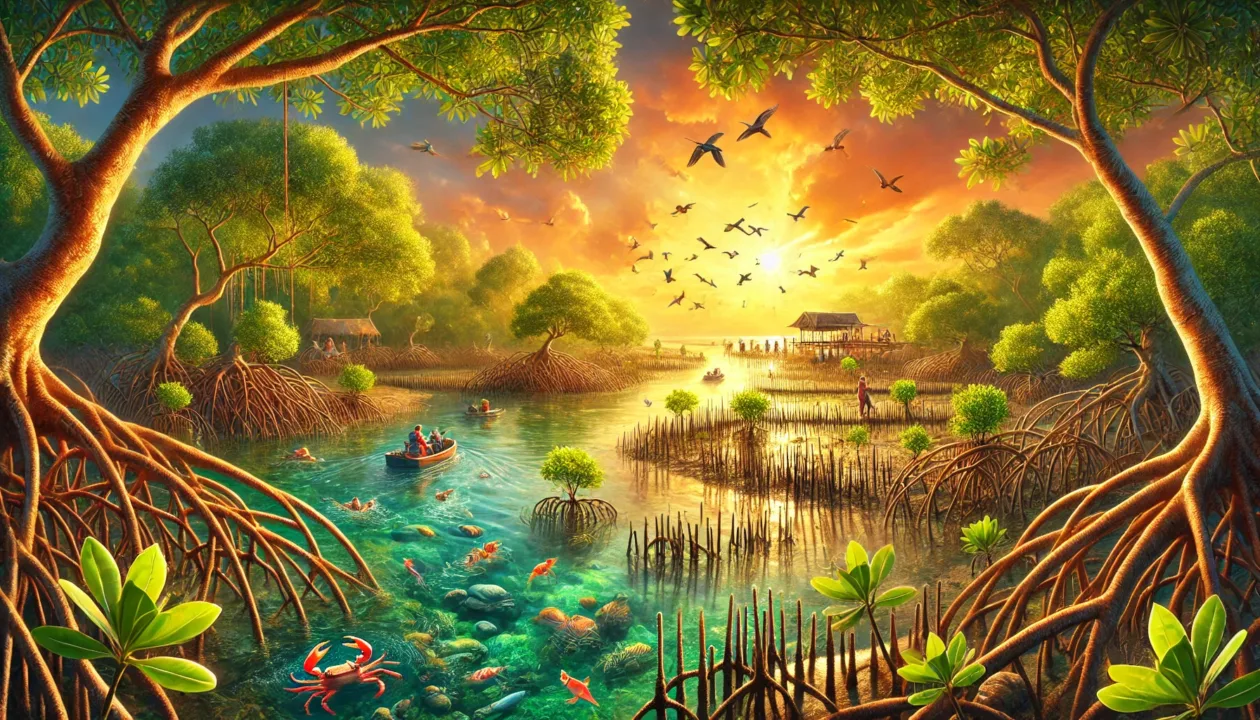
Efforts to conserve mangrove ecosystems are critical to protecting their unique biodiversity and the benefits they provide to both people and the planet. Governments, organisations, and local communities are working together through restoration projects, global agreements, and sustainable practices to ensure a brighter future for mangroves.
Restoration Projects and Mangrove Nurseries
Restoration projects focus on replanting mangroves in areas where they have been destroyed. For example, mangrove nurseries are used to grow young trees, which are later transplanted into degraded areas. These projects not only help restore ecosystems but also provide jobs and involve communities in the conservation process.
One successful example is the planting of mangroves in the Philippines, where damaged coastlines have been revitalised through afforestation. Similarly, the Sundarbans in India and Bangladesh, the world’s largest mangrove forest, is the focus of ongoing conservation efforts to protect its rich biodiversity.
Global Agreements and Protected Areas
International agreements, like the Ramsar Convention, protect important wetlands, including mangroves, by promoting sustainable use and conservation. Governments have also established protected areas to safeguard mangrove forests from logging, aquaculture, and other destructive activities. These zones ensure that mangroves can thrive and continue providing critical ecosystem services such as carbon storage and coastal protection.
Community Engagement and NGOs
Local communities play a key role in sustainable mangrove management. By involving residents in conservation efforts, such as tree planting and monitoring, organisations can ensure long-term success. Non-governmental organisations (NGOs), like the Mangrove Action Project and WWF, support education programmes, fund restoration initiatives, and advocate for stronger environmental policies.
Future Outlook for Mangroves
The future of mangroves depends on continued investment in ecosystem restoration and global cooperation to address challenges like climate change. Innovations in technology, such as using drones to plant mangroves more efficiently, provide hope for faster and larger-scale restoration efforts.
If we protect mangroves through biodiversity preservation, community engagement, and sustainable practices, these ecosystems can continue to thrive. Conserving mangroves is not only about saving forests – it is about securing a healthier, more sustainable future for all life on Earth.
FAQs on the Mangrove Biome
What are mangrove biomes?
Mangrove biomes are coastal ecosystems dominated by salt-tolerant trees and shrubs, known as mangroves, which thrive in intertidal zones of tropical and subtropical regions. These unique environments serve as vital habitats for various terrestrial and marine species, offering protection against coastal erosion and contributing significantly to carbon sequestration.
Where are mangrove biomes typically located?
Mangrove biomes are predominantly found along coastlines in tropical and subtropical regions worldwide, including Southeast Asia, the Caribbean, parts of Africa, and the Americas. Notable examples include the Sundarbans in India and Bangladesh, and the mangroves of the Amazon-Orinoco-Southern Caribbean region.
What species are commonly found in mangrove ecosystems?
Mangrove ecosystems host a diverse array of species, including various mangrove trees like Avicennia and Rhizophora, as well as fauna such as proboscis monkeys, mangrove tree crabs, and numerous bird species like the white-bellied sea eagle. These habitats also support marine life, including fish and crustaceans, which rely on mangroves for breeding and shelter.
How do mangroves adapt to saline and waterlogged conditions?
Mangroves exhibit specialized adaptations to thrive in saline and waterlogged environments, such as developing prop roots and pneumatophores (aerial roots) that facilitate gas exchange in oxygen-poor soils. Some species also possess salt-excreting leaves to manage high salinity levels.
What ecological services do mangrove biomes provide?
Mangrove biomes offer numerous ecological services, including coastal protection from storms and erosion, water filtration, carbon sequestration, and serving as nurseries for various marine species. They also support local livelihoods through resources like timber and fish.
What threats are mangrove biomes currently facing?
Mangrove biomes are threatened by human activities such as deforestation, urban development, aquaculture, and pollution, as well as climate change impacts like rising sea levels and increased storm frequency. These pressures have led to significant declines in mangrove areas globally.
How do mangroves contribute to carbon sequestration?
Mangroves are highly effective at sequestering carbon, storing up to four times more carbon per unit area than terrestrial forests. This capacity makes them crucial in mitigating climate change by capturing and storing atmospheric carbon dioxide.
What conservation efforts are in place to protect mangrove biomes?
Conservation efforts for mangrove biomes include establishing protected areas, promoting sustainable management practices, and engaging local communities in restoration projects. International initiatives, such as the Global Mangrove Alliance, aim to increase mangrove habitats by 20% by 2030 through collaborative conservation strategies.
References and Sources