
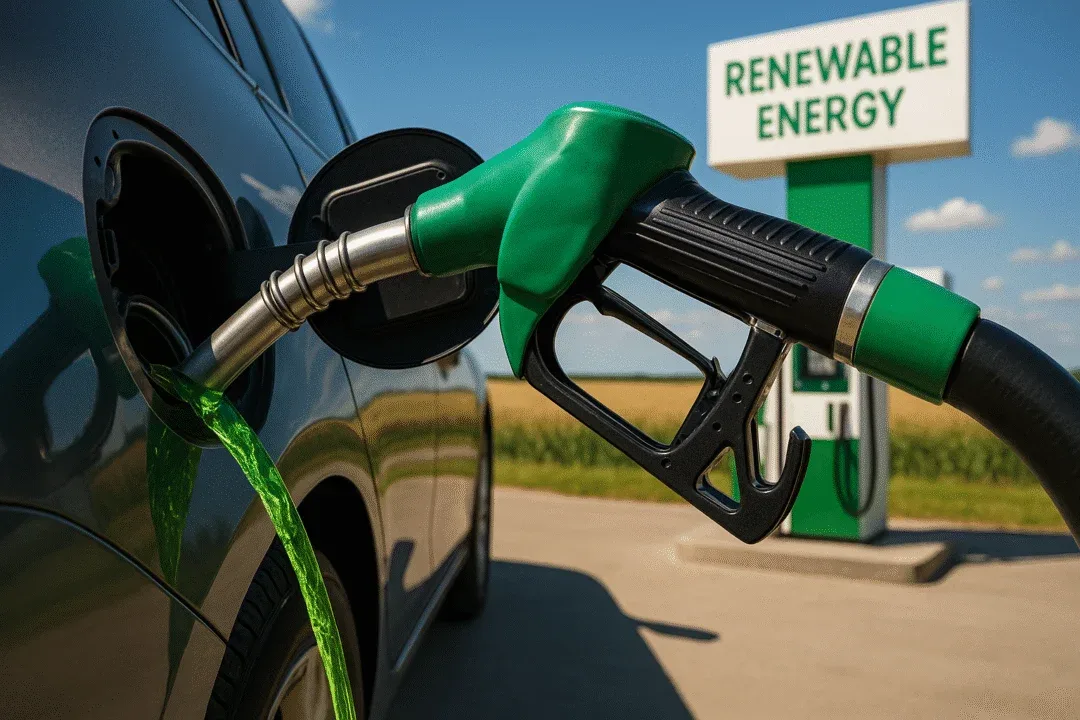
What Are Liquid Biofuels?
Liquid biofuels are renewable fuels derived from biomass – organic materials such as plants, agricultural waste, or used cooking oil. Unlike fossil fuels, which are extracted from ancient geological formations, biofuels are produced from recently living matter, making them part of a shorter carbon cycle and often considered carbon-neutral.
These fuels are used primarily in transportation and industrial sectors, functioning similarly to gasoline or diesel through combustion engines. The two most common types are ethanol (typically made from crops like corn or sugarcane) and biodiesel (produced from vegetable oils or animal fats). Because they emit fewer greenhouse gases than conventional fuels, liquid biofuels play a key role in the transition to sustainable energy systems.
In the broader energy ecosystem, liquid biofuels serve as a bridge between fossil fuels and fully renewable energy sources like solar and wind. They enable reductions in carbon emissions without requiring major changes to existing infrastructure, particularly in the transportation sector.

How Are Liquid Biofuels Made?
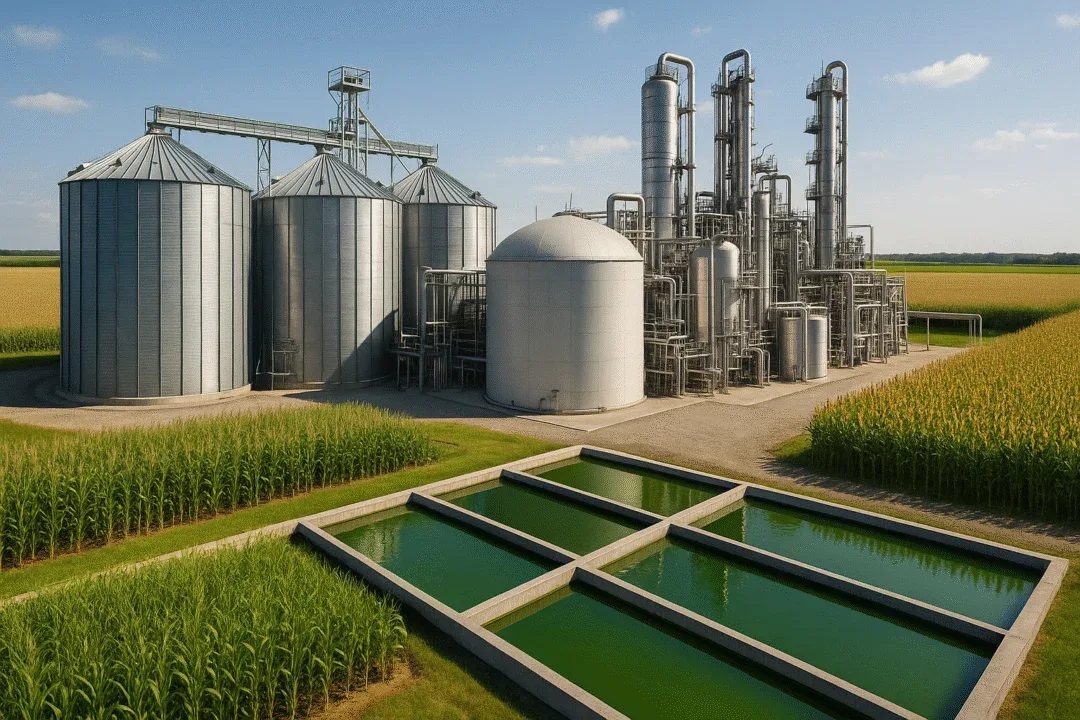
Liquid biofuels are produced by converting organic feedstocks into fuel through chemical, biological, or thermal processes. The choice of feedstock and conversion method determines whether the end product is ethanol or biodiesel.
Common Feedstocks for Liquid Biofuels
- Starch-based crops like corn or wheat
- Sugar-rich plants such as sugarcane
- Cellulosic biomass including crop waste, wood residues, and grasses
- Oils and fats from soybeans, canola, used cooking oil, or animal fats
- Algae, a high-yield source with significant oil content
Biofuel Production Methods
Biofuel Type | Primary Feedstocks | Production Process | Key Output |
|---|---|---|---|
Ethanol | Corn, sugarcane, cellulose | Fermentation – sugars are converted into alcohol by yeast or enzymes | Ethanol |
Cellulosic Ethanol | Crop residues, switchgrass | Enzymatic hydrolysis followed by fermentation | Ethanol |
Biodiesel | Vegetable oils, animal fats, algae | Transesterification – oils react with alcohol (usually methanol) in the presence of a catalyst | Biodiesel (fatty acid methyl esters) |
Fermentation is used primarily for ethanol production. Simple sugars are extracted from crops or broken down from complex carbohydrates and then converted into alcohol in ethanol plants. For cellulosic biofuels, enzymatic conversion is used to break down tough plant fibers.
Transesterification, the main process for making biodiesel, involves chemically converting oils or fats into fuel by separating the glycerin from fatty acids.
Algae-based biofuel production is an emerging method. Algae can produce high oil yields per acre and grow in non-arable land, making them a promising feedstock for future biodiesel and jet fuel production.
These diverse feedstocks and methods make liquid biofuel production flexible and scalable, helping reduce dependence on fossil fuels while utilizing agricultural byproducts and waste streams.
Common and Emerging Types of Liquid Biofuels
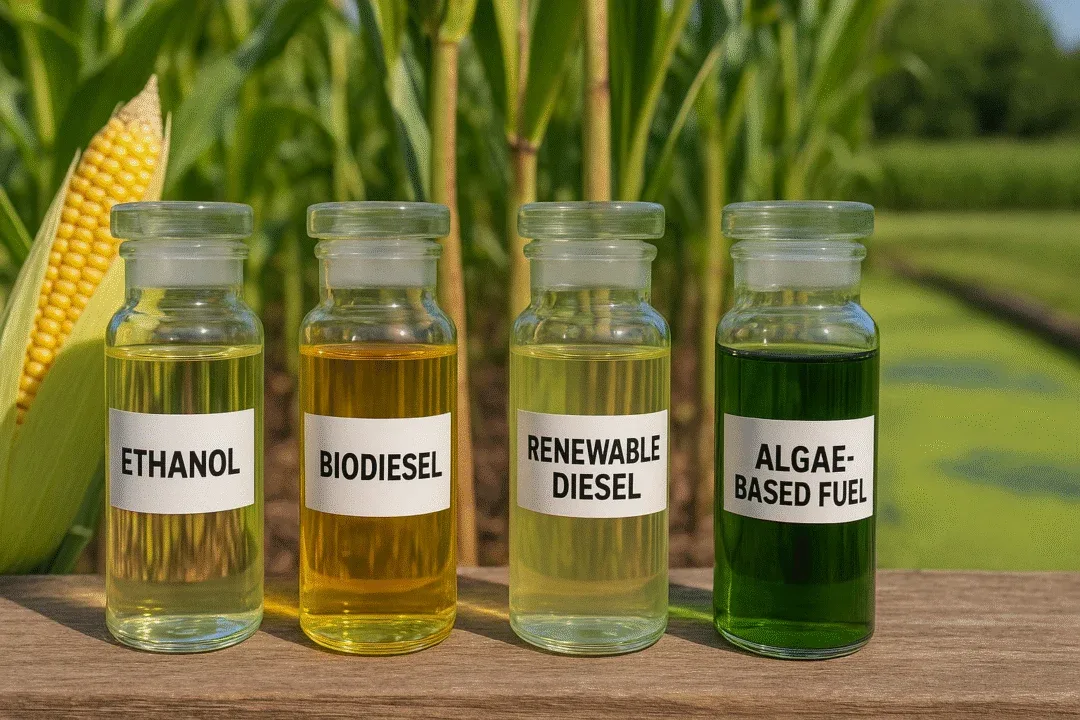
Liquid biofuels fall into two broad categories – conventional (first-generation) and advanced (second-generation and beyond), based on their feedstocks and compatibility with existing fuel infrastructure. Below are the most widely used and emerging types –
Ethanol (Alcohol Fuel)
- Source – Starch or sugar-based crops such as corn, sugarcane, and wheat
- Process – Fermentation of sugars into alcohol
- Use – Blended with gasoline (e.g., E10, E85) for cars with internal combustion engines
- Notes – Most common biofuel globally; considered a first-generation biofuel
Biodiesel (Vegetable Oil-Based Fuel)
- Source – Vegetable oils, animal fats, or used cooking oils
- Process – Transesterification, converting fats into fatty acid methyl esters (FAME)
- Use – Blended with petroleum diesel (e.g., B20, B100)
- Notes – Can be used in diesel engines with little to no modification
Renewable Diesel (Green Diesel)
- Source – Same as biodiesel – oils and fats, but processed differently
- Process – Hydrotreatment, not transesterification
- Use – Drop-in fuel – chemically similar to petroleum diesel, compatible with existing pipelines and engines
- Notes – Higher energy density and better cold-weather performance than biodiesel
Biobutanol
- Source – Similar to ethanol – fermentable sugars from crops or cellulose
- Process – ABE fermentation (Acetone-Butanol-Ethanol) using specific bacteria
- Use – Blended with gasoline or used in flexible fuel vehicles
- Notes – Higher energy content than ethanol and less corrosive – promising as a next-gen fuel
Advanced and Second-Generation Biofuels
- Source – Non-food biomass such as agricultural residues, wood chips, switchgrass, and municipal solid waste
- Examples –
- Cellulosic Ethanol
- Algae-based Biodiesel
- Synthetic Biofuels from gasification and Fischer–Tropsch synthesis
- Use – Designed to reduce land use impact and increase sustainability
- Notes – These fuels aim to overcome the food vs. fuel debate and improve net carbon savings
Comparison Snapshot
Type | Feedstock | Compatibility | Generation |
|---|---|---|---|
Ethanol | Corn, sugarcane | Gasoline engines | First-gen |
Biodiesel | Vegetable oils | Diesel engines | First-gen |
Renewable Diesel | Oils, fats | Drop-in (diesel) | Advanced |
Biobutanol | Sugars, cellulose | Gasoline engines | Advanced |
Cellulosic Fuels | Crop waste | Varies | Second-gen |
Emerging biofuels like green diesel, biobutanol, and algae-derived fuels represent the future of low-carbon liquid energy. As production technologies scale, these alternatives offer greater energy efficiency, infrastructure compatibility, and environmental benefits than earlier-generation biofuels.
How and Where Liquid Biofuels Are Used
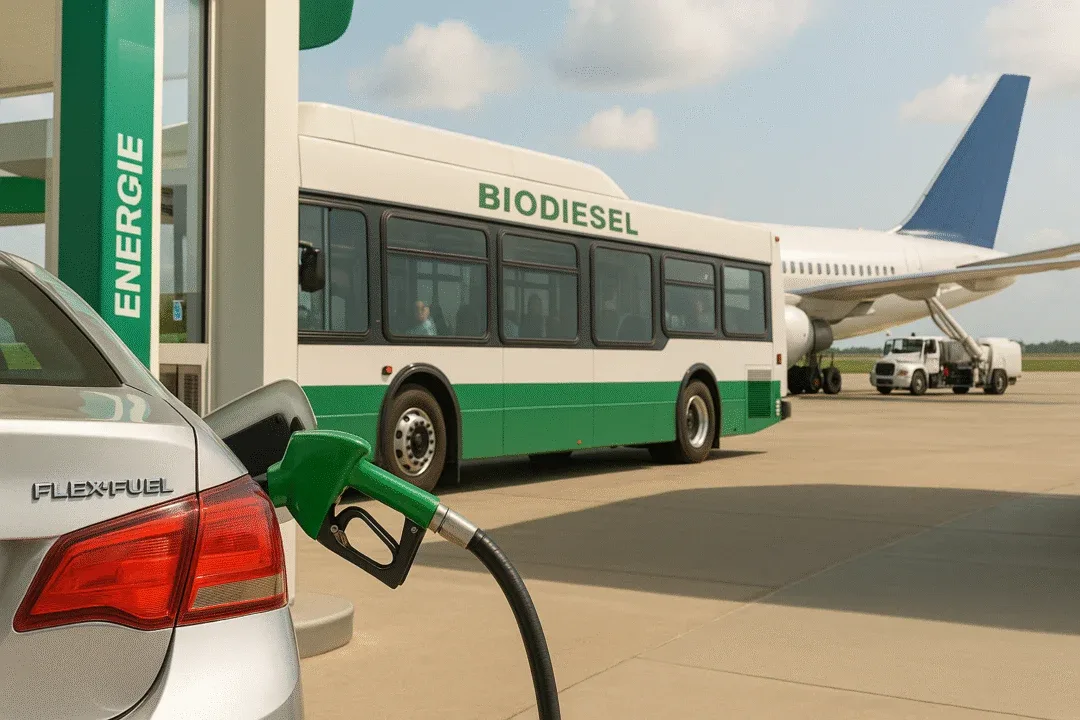
Liquid biofuels are primarily used in transportation, aviation, and heating applications, often as blended fuels compatible with existing engines and infrastructure. Their versatility makes them a key component of the low-carbon energy mix across multiple sectors.
Road Transport
Ethanol and biodiesel are widely used in passenger vehicles, trucks, and public transport fleets.
- E10 (10% ethanol, 90% gasoline) – Standard fuel in countries like the U.S., Brazil, and EU nations
- E85 (up to 85% ethanol) – Used in flex-fuel vehicles (FFVs) designed to run on higher ethanol blends
- B5, B20, B100 – Biodiesel blends ranging from 5% to 100%, used in diesel engines with minimal modifications
- Fleet applications – City buses, delivery trucks, and commercial fleets often use B20 or higher blends for reduced emissions
Aviation
Biojet fuel, also called Sustainable Aviation Fuel (SAF), is an emerging liquid biofuel used in commercial and military aircraft.
- Made from feedstocks like used cooking oil, algae, and waste biomass
- Certified blends (e.g., up to 50% SAF mixed with conventional jet fuel) are already in use by major airlines
- Key to decarbonizing aviation, which is harder to electrify
Industrial and Residential Heating
Biodiesel and renewable heating oils are used as industrial fuels and for residential boilers, especially in regions aiming to reduce fossil heating oil use.
- Can replace heating oil in existing infrastructure with minor adjustments
- Used in schools, hospitals, and public buildings for cleaner heat
Agriculture and Hybrid Systems
- Biofuels power farm machinery and off-road equipment, especially in biodiesel-compatible engines
- Hybrid systems combine biofuel use with solar or battery energy, especially in decentralized energy solutions
Application Overview
Sector | Biofuel Type | Common Blends/Uses | Notes |
|---|---|---|---|
Road Transport | Ethanol, Biodiesel | E10, E85, B20 | Widely available, supports flex-fuel |
Aviation | Biojet Fuel (SAF) | Up to 50% blends | Reduces lifecycle emissions by up to 80% |
Heating | Biodiesel | Pure or blended | Alternative to heating oil |
Industry/Fleets | Biodiesel | B20–B100 | Used in municipal and corporate fleets |
Agriculture | Biodiesel | B5–B20 | Reduces rural fossil fuel dependency |
Liquid biofuels are already integrated into modern energy systems, offering drop-in compatibility, reduced carbon emissions, and flexibility across multiple sectors. Their expanding role, especially in aviation and industrial uses, positions them as critical components of the global energy transition.
Benefits of Liquid Biofuels
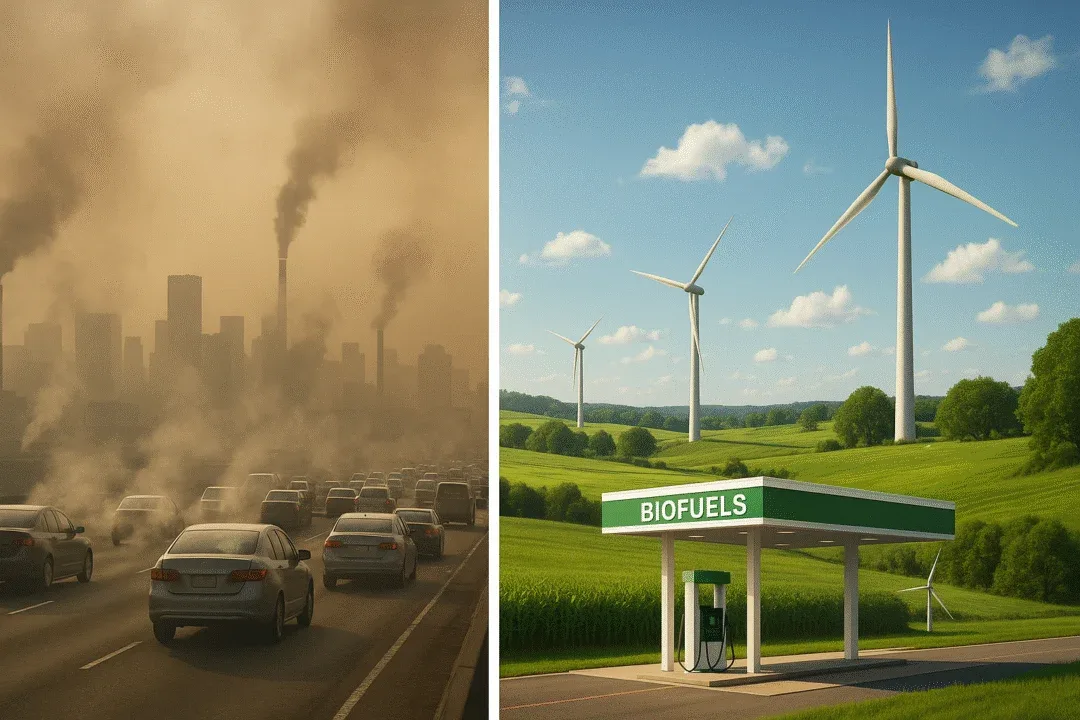
Liquid biofuels offer key environmental, economic, and energy security advantages that support global climate goals and promote clean energy transitions – especially in transportation and industrial sectors.
Lower Greenhouse Gas Emissions
Biofuels emit significantly less CO₂ over their lifecycle compared to fossil fuels.
- Ethanol can reduce greenhouse gas emissions by up to 40–60%, depending on the feedstock and production process
- Biodiesel can achieve up to 80% CO₂ reduction versus petroleum diesel
- These benefits come from the short carbon cycle of biomass – plants absorb CO₂ as they grow, partially offsetting emissions when fuels are burned
Supports Climate and Clean Energy Goals
Biofuels contribute directly to meeting climate targets and renewable energy mandates.
- Help countries comply with emissions reduction targets under the Paris Agreement
- Enable cleaner transportation in sectors that are difficult to electrify, such as aviation and long-haul freight
- Provide a scalable clean energy option that fits into existing fuel infrastructure
Enhances Energy Security and Independence
Liquid biofuels reduce reliance on imported oil by using domestic resources such as crops, waste oils, and agricultural residues.
- Diversifies the national energy supply
- Stabilizes fuel prices by reducing exposure to global oil market volatility
- Boosts energy independence, especially in rural or fuel-importing regions
Stimulates Rural and Agricultural Economies
Biofuel production creates local jobs and adds value to agricultural outputs and waste streams.
- Generates green jobs in farming, feedstock processing, fuel production, and logistics
- Supports farmers through new markets for crops and crop residues
- Encourages investment in rural infrastructure and innovation
Compatible with Existing Infrastructure
Unlike some clean energy solutions, biofuels can be used in current vehicles, engines, and fuel distribution systems.
- Reduces upfront costs for consumers and businesses
- Facilitates faster adoption of cleaner fuels with minimal disruption
Key Benefits of Liquid Biofuels
Benefit Area | Impact | Example |
|---|---|---|
Emissions | CO₂ reduction up to 80% | Biodiesel vs. diesel (lifecycle analysis) |
Climate Goals | Helps meet national and global targets | EU Renewable Energy Directive, U.S. RFS |
Energy Security | Reduces oil imports | Corn ethanol in the U.S., sugarcane ethanol in Brazil |
Economic Growth | Rural jobs and local investment | Biofuel plants in Midwest U.S. |
Infrastructure Fit | Works in current engines and pumps | E10, B20 blends in conventional vehicles |
Liquid biofuels provide a practical, low-emission, and economically beneficial pathway to reduce fossil fuel dependence while supporting sustainable development and local economies.
Limitations and Criticisms of Liquid Biofuels
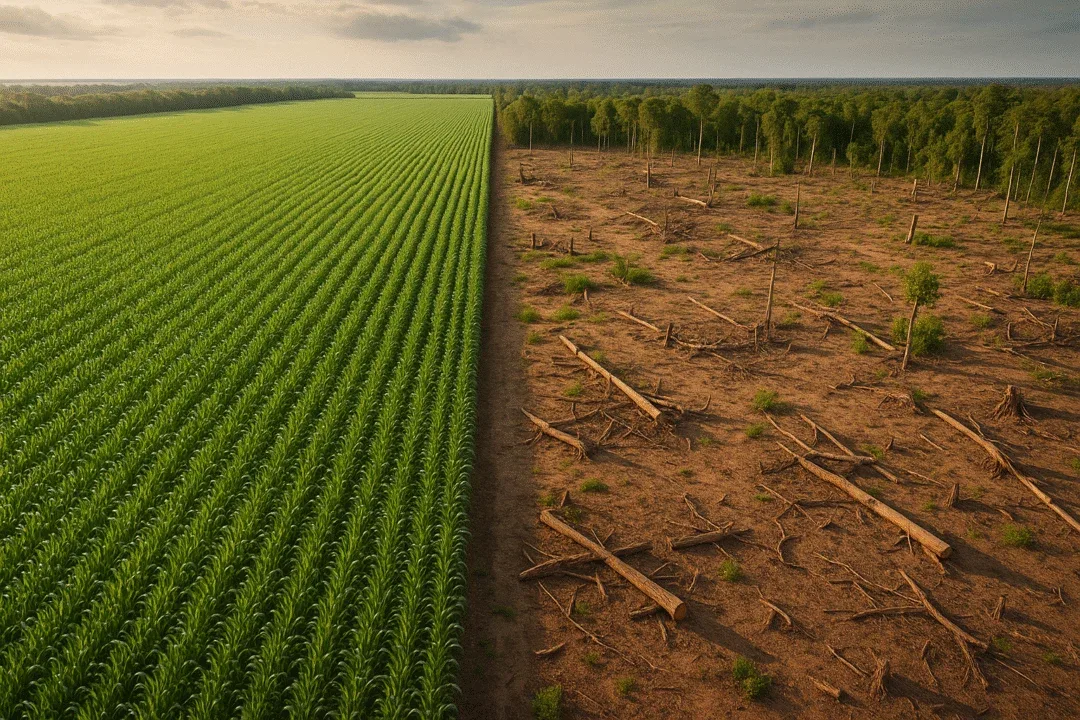
While liquid biofuels offer environmental and economic benefits, they also face important limitations and criticisms related to sustainability, scalability, and environmental impact. These concerns are especially relevant when considering long-term climate strategies and resource allocation.
Food vs. Fuel Debate
One of the most prominent criticisms is that biofuel production competes with food supply, especially when food crops like corn, wheat, or sugarcane are used as feedstocks.
- Using arable land for fuel can drive up food prices, contributing to food insecurity
- Demand for biofuel crops may divert land from essential food production
- This issue is especially acute in developing regions with limited agricultural land
Land Use and Deforestation
Expanding biofuel production can lead to land use change, including deforestation, habitat loss, and reduced biodiversity.
- Monoculture farming for crops like palm oil or soy can degrade ecosystems
- Indirect land use change (ILUC) occurs when forests are cleared elsewhere to replace food crops displaced by biofuel crops
- These changes can release more carbon emissions than the biofuels save
Water Use and Environmental Impact
Biofuel crops often require significant amounts of water, fertilizers, and pesticides, leading to potential soil degradation and water pollution.
- Corn ethanol has high water intensity, consuming up to 1,500–4,000 liters of water per liter of fuel
- Runoff from fertilizer use can cause algal blooms and damage aquatic ecosystems
- In drought-prone areas, biofuel farming can intensify water scarcity
Energy Balance and Efficiency
Not all biofuels offer a favorable net energy balance – the ratio of energy output to energy input.
- Some first-generation biofuels (e.g., corn ethanol) have low energy returns once farm inputs, processing, and transport are considered
- Second-generation fuels (from crop residues or waste) typically have better lifecycle efficiency, but are more costly to produce
Cost and Scalability Challenges
Producing advanced biofuels at scale remains technically complex and economically expensive.
- Cellulosic ethanol and algae-based fuels face high capital and processing costs
- Supply chains for waste-based and non-food biofuels are not yet widely developed
- Government subsidies and mandates often prop up the industry, raising concerns about long-term viability
Key Criticisms of Liquid Biofuels
Limitation | Concern | Example |
|---|---|---|
Food vs. Fuel | Diverts crops from food supply | Corn used for ethanol instead of food |
Land Use | Deforestation and habitat loss | Palm oil plantations replacing rainforests |
Water Use | High consumption and pollution | Corn ethanol in water-scarce regions |
Energy Efficiency | Low net energy gain for some fuels | Fossil inputs vs. output in corn ethanol |
Scalability & Cost | High production costs for advanced biofuels | Cellulosic ethanol commercialization hurdles |
While liquid biofuels contribute to reducing emissions and fossil fuel use, their sustainability depends on feedstock choices, land use practices, and technological advances. Balancing benefits with these limitations is critical to ensuring that biofuels are part of a responsible and equitable clean energy future.
Environmental Impact and Renewable Energy Comparison
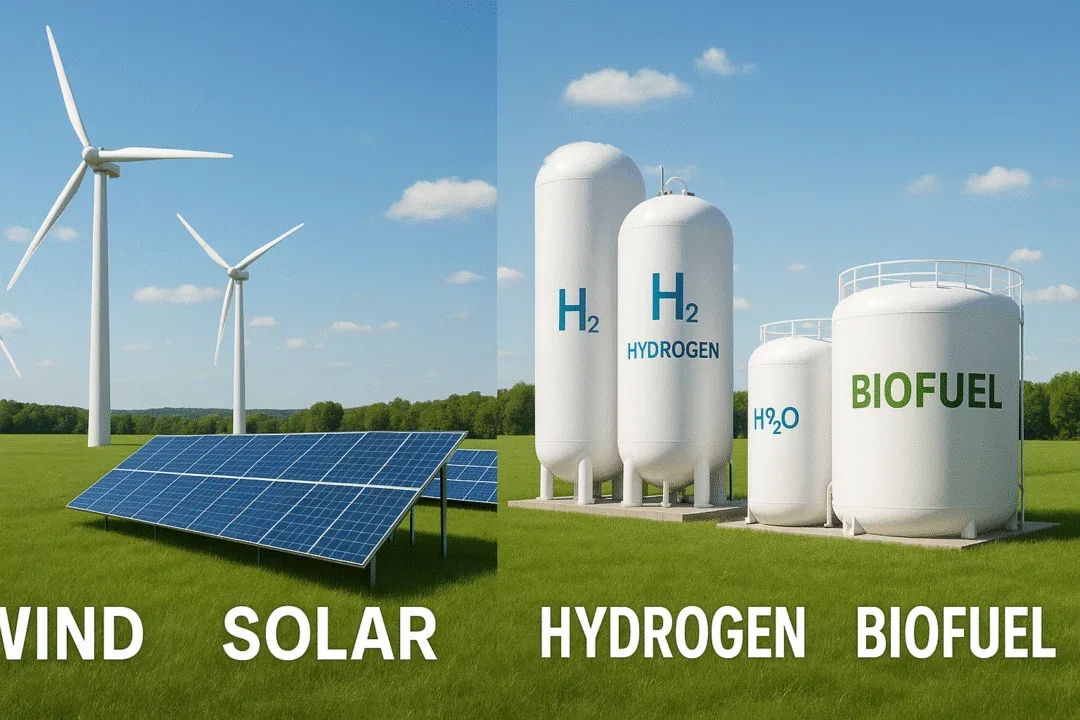
Liquid biofuels have a mixed environmental profile when compared to other renewable energy sources like solar, wind, and hydrogen. While they offer advantages in certain use cases – especially in transport sectors that are hard to electrify – they are generally less efficient and more resource-intensive than other clean technologies.
Lifecycle Emissions and Carbon Footprint
- Biofuels can reduce lifecycle CO₂ emissions by 40–80% compared to fossil fuels, depending on the feedstock and production method.
- Solar and wind power generate electricity with near-zero emissions during operation and lower emissions across their full lifecycle than any liquid fuel.
- Green hydrogen, produced via electrolysis using renewable electricity, emits only water vapor and has no direct CO₂ emissions when used.
Biofuels are lower-carbon than fossil fuels but higher-carbon than wind, solar, or hydrogen in most scenarios.
Resource Use and Efficiency
- Biofuels require large amounts of land, water, and energy to grow crops, extract oils, and process fuel.
- Solar and wind have much higher energy return on investment (EROI) and use far less land per unit of energy, especially when deployed on rooftops or offshore.
- Hydrogen can be made from water using renewable electricity, though it currently suffers from efficiency losses during conversion and storage.
Biofuels are resource-intensive, especially in terms of land and water, compared to more efficient clean energy technologies.
Power Density and Use Case Fit
Technology | Best Use Cases | Power Density (W/m²)* |
|---|---|---|
Biofuels | Aviation, shipping, long-haul transport | ~0.5–1.2 W/m² |
Solar | Electricity for homes, industry, EVs | ~5–20 W/m² (rooftop to utility) |
Wind | Grid-scale electricity, remote power | ~1–2 W/m² |
Hydrogen | Heavy transport, industry, energy storage | Varies (depends on production method) |
*Power density estimates based on land use and average energy yield
Biofuels make the most sense where high energy density is required, such as aviation or freight, but are less suitable where electrification is feasible.
Clean Energy Role and Limitations
Factor | Biofuels | Solar & Wind | Hydrogen |
|---|---|---|---|
Emissions | Medium (40–80% reduction) | Very low (near zero) | Zero (if green) |
Land Use | High | Moderate to low | Low (for green H₂) |
Water Use | High (esp. for crops) | Low | Moderate (electrolysis) |
Infrastructure Fit | Compatible with existing | Needs grid upgrades | Needs new pipelines |
Best Fit | Transport fuels, aviation | Electricity generation | Industry, heavy-duty |
When Biofuels Make Sense
- Hard-to-electrify sectors – Long-haul trucks, airplanes, ships
- Regions with existing agricultural waste streams
- Drop-in fuel compatibility with current engines and infrastructure
When Other Renewables Are Better
- Electricity generation and buildings – Solar and wind dominate
- Urban transport – EVs powered by renewables are cleaner and more efficient
- Industrial decarbonization – Hydrogen offers higher potential for heat and feedstock replacement
Liquid biofuels offer moderate climate benefits and flexible use in sectors where electrification is impractical, but they fall short of the efficiency and long-term sustainability of technologies like solar, wind, and green hydrogen. Their role in the renewables mix is valuable but specialized – not a one-size-fits-all clean energy solution.
Market Trends and Economic Outlook for Liquid Biofuels
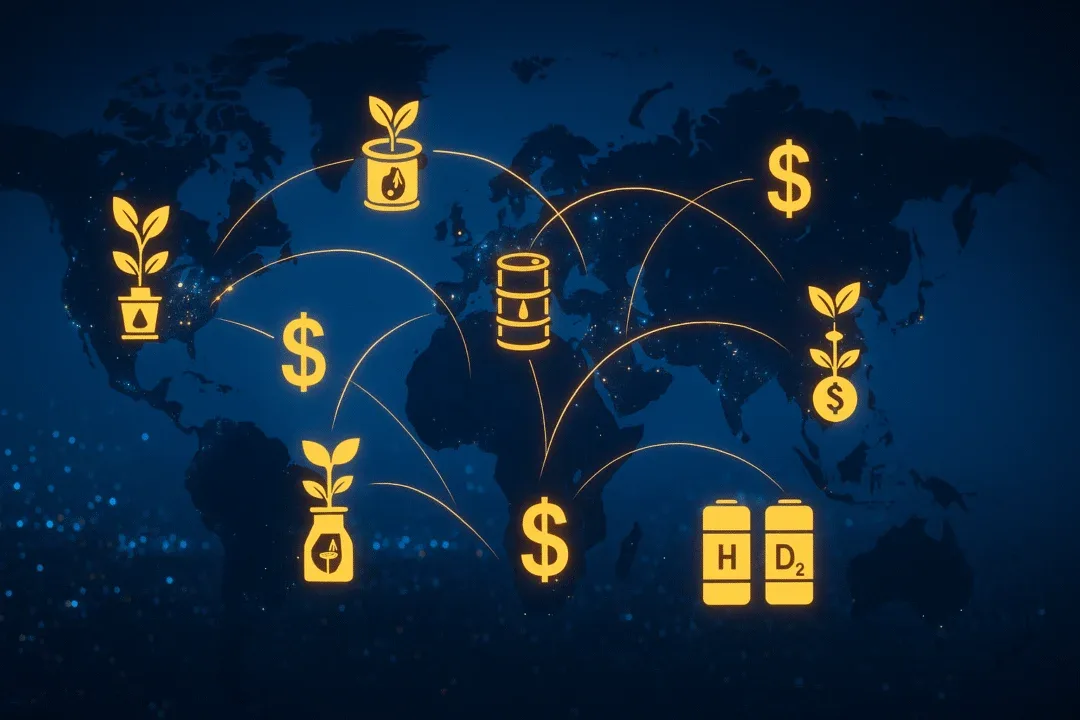
The global liquid biofuels market is growing steadily, driven by climate policies, renewable fuel mandates, and the push for energy diversification. While biofuels offer economic opportunities – especially in agriculture and rural development – their market outlook is shaped by feedstock prices, policy support, and competition from electrification and other renewables.
Global Market Size and Growth
- The global biofuels market was valued at over $120 billion in 2023, with projections to exceed $200 billion by 2030, growing at a CAGR of 6–7%.
- Asia-Pacific, North America, and Latin America are the fastest-growing markets, driven by domestic fuel mandates and rural development strategies.
- Ethanol dominates global production, especially in the U.S. (corn-based) and Brazil (sugarcane-based), while biodiesel leads in Europe.
Key Market Drivers
- Renewable fuel mandates such as the U.S. Renewable Fuel Standard (RFS), the EU’s Renewable Energy Directive (RED II), and India’s E20 ethanol blending target
- Growing energy security concerns amid global oil price fluctuations and geopolitical instability
- Corporate demand for low-carbon fuels in aviation, shipping, and fleet operations
Economic and Trade Impacts
Indicator | Trend |
|---|---|
Production volume | Over 160 billion liters globally in 2023 |
Top producers | U.S., Brazil, EU, China, Indonesia |
Top exporters | U.S. (ethanol), Argentina (biodiesel) |
Top importers | India, EU, Japan |
Job creation | Over 2.4 million jobs worldwide (IRENA) |
Biofuels support rural economies through farming, fuel processing, logistics, and R&D – contributing to green job growth in both developed and emerging markets.
Challenges and Market Risks
- Feedstock price volatility affects profitability and price parity with fossil fuels
- Subsidy dependency remains high in many markets; long-term viability hinges on cost competitiveness
- Trade tensions and tariffs (e.g., EU anti-dumping duties on biodiesel) can distort global supply chains
- Electrification trends in transport may limit future demand in light-duty vehicle segments
Forecast Snapshot (2025–2030)
Segment | Outlook | Notes |
|---|---|---|
Ethanol | Stable growth in Asia & LATAM | India, China scaling up blending mandates |
Biodiesel | Strong in EU, moderate in U.S. | Driven by truck fleets, heating oil replacement |
SAF (Biojet Fuel) | Fastest-growing segment | Expected to reach 8–10% of aviation fuel by 2030 |
Advanced Biofuels | Gradual scale-up | Cost and technology barriers remain |
Economic Outlook Summary
Factor | Impact on Market |
|---|---|
Government Policy | High – mandates drive demand |
Technological Innovation | Medium – improves efficiency |
Feedstock Availability | High – affects cost and scale |
Global Trade Flows | Medium – import/export dynamics |
EV Adoption | Moderate – affects transport fuel |
Liquid biofuels remain a key transitional energy source with a growing global market, especially in aviation and heavy transport. However, their long-term economic trajectory will depend on feedstock innovation, policy stability, and how they compete within a rapidly evolving clean energy economy.
Policy, Regulations, and Standards for Liquid Biofuels

Government policies and regulations are the primary drivers of the global liquid biofuels market, shaping production levels, blending rates, and emissions reductions. National and international frameworks support biofuel adoption through mandates, incentives, and sustainability criteria, ensuring these fuels align with broader climate and energy goals.
United States – Renewable Fuel Standard (RFS)
Administered by the Environmental Protection Agency (EPA), the RFS requires fuel suppliers to blend renewable fuels into transportation fuel.
- Annual blending quotas are set for four categories – conventional biofuel, advanced biofuel, biomass-based diesel, and cellulosic biofuel
- Renewable Identification Numbers (RINs) serve as compliance credits
- Blending target for 2025 – ~22.8 billion gallons, with increasing emphasis on advanced and cellulosic biofuels
Incentives –
- Blender tax credits (e.g., $1/gallon for biodiesel)
- Biofuel producers may also qualify for carbon credit trading markets and investment tax credits
European Union – Renewable Energy Directive II (RED II)
The EU’s RED II sets binding targets for renewable energy in transport, with detailed sustainability criteria.
- Target – At least 14% renewable energy in transport by 2030
- Cap on food-based biofuels – No more than 7% of transport fuel
- Promotes advanced biofuels from non-food feedstocks through double counting toward targets
- Requires full lifecycle greenhouse gas savings and proof of sustainable sourcing
Brazil – RenovaBio Program
Brazil integrates biofuel regulation into its national climate plan through RenovaBio, a credit-based carbon market.
- Fuel producers must meet emissions reduction targets based on lifecycle analysis
- Generates Decarbonization Credits (CBIOs) traded in a regulated market
- Supports Brazil’s leadership in sugarcane ethanol and investment in second-generation biofuels
India – National Bio-Energy Policy & Ethanol Blending Program (EBP)
India is aggressively scaling up its ethanol use in gasoline under the EBP.
- Target – Achieve 20% ethanol blending (E20) by 2025
- Promotes the use of non-food feedstocks like crop waste and damaged grains
- Offers financial support for ethanol plants and transport infrastructure
International Aviation – CORSIA
The Carbon Offsetting and Reduction Scheme for International Aviation (CORSIA), led by the International Civil Aviation Organization (ICAO), sets emissions caps for airline operators.
- Allows the use of Sustainable Aviation Fuels (SAFs) to reduce offset requirements
- Fuels must meet strict sustainability and lifecycle GHG savings criteria to qualify
- Encourages the global rollout of biojet fuels by creating a carbon pricing incentive
Key Policy Mechanisms Supporting Biofuels
Mechanism | Description | Regions Using It |
|---|---|---|
Fuel Blending Mandates | Require a minimum % of biofuel in gasoline or diesel | U.S., EU, Brazil, India, Indonesia |
Carbon Credit Programs | Assign value to lifecycle emissions reductions | U.S. (RFS), Brazil (CBIO), CORSIA |
Sustainability Criteria | Require land use and GHG impact verification | EU RED II, CORSIA, voluntary certification bodies |
Tax Credits & Subsidies | Financial incentives for production and blending | U.S., Canada, EU |
Advanced Biofuel Quotas | Minimum levels for next-gen fuels | U.S. RFS, EU RED II |
Compliance and Certification Systems
- ISCC (International Sustainability & Carbon Certification) and RSB (Roundtable on Sustainable Biomaterials) provide third-party verification
- Lifecycle emissions thresholds must often meet 50–60% GHG savings compared to fossil fuel baselines
- Fuel suppliers must report and verify sourcing, land use, and production emissions to qualify
Biofuel regulations play a critical role in market stability, emissions reductions, and sustainability. Fuel mandates, carbon credit schemes, and tax incentives ensure that biofuels remain a viable clean energy option – particularly in transportation sectors where electrification is limited. However, future policy evolution will likely focus more on advanced biofuels, non-food feedstocks, and full lifecycle climate impacts.
Innovation and the Future of Biofuels
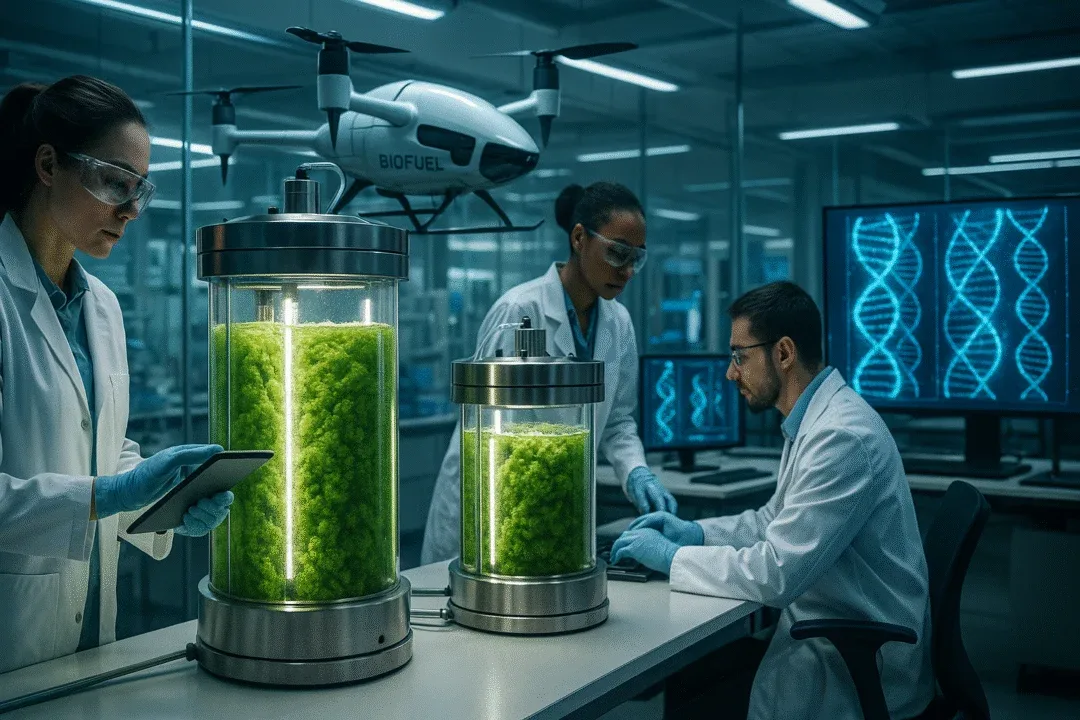
The future of liquid biofuels lies in advanced biotechnology, engineered feedstocks, and integrated energy systems that promise higher yields, lower emissions, and greater sustainability. From algae-based fuels to synthetic biology breakthroughs, innovation is transforming biofuels into a more scalable and climate-resilient energy solution.
Algae-Based Fuels (Third-Generation Biofuels)
Algae fuels are a major area of research due to their high oil content, fast growth rates, and ability to grow on non-arable land.
- Microalgae can produce 10–100x more oil per acre than traditional crops like soy or canola
- Require no freshwater or fertile soil, making them ideal for closed-loop and marginal land systems
- Can absorb industrial CO₂ emissions, enabling carbon recycling during growth
Challenges –
- High production costs
- Energy-intensive harvesting and extraction
- Limited commercial scale, though pilot plants are in development globally
Synthetic Biology and Genetically Engineered Microbes
Synthetic biology enables the design of custom microbes and enzymes to enhance biofuel production from non-traditional sources.
- CRISPR gene editing is being used to engineer yeast, bacteria, and algae for higher yield and efficiency
- Microbial biofuels can convert cellulose, industrial gases, or even plastic waste into fuels
- Some engineered microbes directly secrete hydrocarbon chains, eliminating complex processing steps
Example – Companies like LanzaTech are using gas fermentation to convert industrial CO₂ into ethanol and jet fuel
Carbon Recycling and Closed-Loop Biofuel Systems
Innovators are exploring carbon-negative and circular systems where CO₂ emissions are captured and reused in the biofuel production cycle.
- Biorefineries integrated with carbon capture can lower net emissions or even achieve net-negative carbon outputs
- Waste-to-fuel technologies turn municipal solid waste, manure, or agricultural residues into liquid fuels
- Supports the development of decentralized energy systems with minimal environmental impact
Advanced Feedstocks and Conversion Technologies
- Fourth-generation biofuels aim to use engineered biomass or photosynthetic organisms that absorb more CO₂
- Thermochemical processes like pyrolysis and hydrothermal liquefaction are being optimized for faster, cleaner fuel production
- New catalysts and solvent systems improve conversion rates for cellulosic and lignin-rich biomass
Integration with Fuel Cells and Hybrid Systems
- Researchers are developing biofuel-compatible fuel cells for high-efficiency, low-emission energy conversion
- Hybrid systems combining solar power, batteries, and biofuels could provide reliable off-grid or mobile energy solutions
Innovation Outlook
Innovation Area | Description | Potential Impact |
|---|---|---|
Algae Fuels | Oil-rich, fast-growing microorganisms | High yield, low land use |
Synthetic Biology | Genetically modified microbes and enzymes | Custom biofuel production from waste |
Carbon Recycling | CO₂ capture and reuse in biofuel processes | Net-zero or net-negative fuel systems |
Advanced Feedstocks | Non-food biomass and engineered crops | Greater sustainability and scalability |
Fuel Cell Integration | Biofuels used in clean power systems | Efficient off-grid and transport energy |
Innovation is reshaping the biofuels landscape, moving beyond food-based fuels to more sustainable, engineered, and efficient energy solutions. Technologies like algae cultivation, CRISPR-driven bioconversion, and closed-loop carbon systems could unlock the next generation of climate-positive fuels. As these solutions scale, liquid biofuels may play an important role not just in reducing emissions – but in actively reversing them.
FAQ’s
What are liquid biofuels?
Liquid biofuels are renewable fuels made from biomass, such as crops, algae, or organic waste. Common types include ethanol and biodiesel, used primarily in transportation.
How are liquid biofuels produced?
Liquid biofuels are produced using processes like fermentation for ethanol and transesterification for biodiesel, using feedstocks such as corn, sugarcane, algae, or waste oils.
What are the different types of liquid biofuels?
Types of liquid biofuels include ethanol, biodiesel, renewable diesel, biobutanol, and advanced biofuels made from non-food biomass like algae or crop waste.
Where are liquid biofuels used?
Liquid biofuels are used in cars, trucks, aviation, and heating systems. Blends like E10, E85, and B20 are common in transportation, while SAF is growing in aviation.
What are the benefits of liquid biofuels?
Benefits include lower CO₂ emissions, enhanced energy security, rural economic growth, and compatibility with existing fuel infrastructure.
What are the limitations of liquid biofuels?
Challenges include food vs. fuel conflicts, land and water use, limited scalability, and lower energy efficiency compared to solar or wind power.
How do biofuels compare to other renewable energy sources?
Biofuels are useful in hard-to-electrify sectors like aviation but are generally less efficient and more resource-intensive than solar, wind, or green hydrogen.
What is the global outlook for biofuels?
The global biofuels market is growing due to fuel mandates and climate goals, with strong demand in transportation and emerging sectors like aviation and shipping.
What policies and regulations affect biofuels?
Key policies include the U.S. Renewable Fuel Standard, EU RED II, Brazil's RenovaBio, and India's E20 mandate, all setting blending targets and sustainability criteria.
What innovations are shaping the future of biofuels?
Emerging innovations include algae-based fuels, CRISPR-modified microbes, waste-to-fuel systems, and carbon-negative biorefineries enabling cleaner, scalable fuel options.
References and Sources