

Why Environmental Sustainability Matters More Than Ever
Environmental sustainability is no longer a choice – it is a survival imperative. The world is rapidly approaching a climate tipping point, where rising global temperatures, collapsing biodiversity, and intensifying natural disasters signal a crisis of planetary proportions. According to the United Nations, we have less than 5 years to reverse emission trends and avoid irreversible damage to ecosystems and human life.
The urgency stems from more than just melting ice caps or forest fires – it’s about preserving the systems that sustain life. Youth-led movements, global summits, and growing media focus reflect a surge in climate crisis awareness, especially among younger generations who will inherit this planet. Terms like “climate emergency” and “eco-collapse” have entered mainstream discourse because the consequences of inaction are no longer hypothetical – they’re measurable, visible, and accelerating.
Sustainability now ranks among the top global priorities, influencing policies, investments, and consumer behavior. The drive to go green is fueled by a collective realization: the longer we delay, the narrower our window for action becomes.
Why Sustainability Matters Now
Factor | Urgency |
|---|---|
Global Emissions | Must peak before 2030 to limit warming to 1.5°C (IPCC) |
Biodiversity Loss | Over 1 million species are at risk of extinction (UN) |
Youth Mobilization | Millions worldwide demand climate action through protests and policy advocacy |
Policy Deadlines | Net-zero targets set for 2050 require immediate planning and systemic change |

The importance of environmental sustainability today is defined by our position on a rapidly narrowing timeline. Acting now is not about idealism – it’s about prioritizing survival and safeguarding future generations from a preventable catastrophe.
Ancient Roots of Sustainability Practices

Long before modern science, ancient civilizations practiced environmental sustainability through deep-rooted ethics of land stewardship and ecological balance. These early systems – guided by reciprocity, harmony with nature, and subsistence living – formed the foundation of what we now call traditional environmentalism.
In Indigenous cultures, sustainability was embedded in everyday life. Across the Americas, communities followed cyclical harvest patterns, practiced controlled burns, and viewed nature as kin – not a resource, but a relative. This indigenous sustainability model emphasized respect for land and sacred natural systems, prioritizing regeneration over exploitation.
Ancient texts also echo these principles. The Indian Vedas describe the Earth as a mother, urging humans to live in balance and reverence. Taoist philosophy in China advocates wu wei – non-interference with the natural flow – as a path to both inner peace and environmental stability. In Ancient Rome, agronomists like Columella wrote about soil conservation and crop rotation, warning against overuse of land even as the empire expanded.
These early eco practices weren’t just spiritual – they were practical systems of survival, based on generational knowledge. Societies that ignored environmental limits, from Mesopotamia to the Mayans, often collapsed under the weight of deforestation, soil depletion, or water mismanagement – early warnings of what unsustainable growth leads to.
Examples of Pre-Industrial Sustainability
Civilization/Tradition | Sustainable Practice | Environmental Principle |
|---|---|---|
Native American | Seasonal rotation of crops and hunting | Reciprocity with land |
Ancient India (Vedas) | Forest protection and water rituals | Sacred nature, balance |
Taoism (China) | Harmony with natural systems | Non-interference (wu wei) |
Ancient Rome | Crop rotation, terracing | Soil conservation, stewardship |
Ancient eco thinking reveals that environmentalism is not a modern invention – it’s a rediscovery. These civilizations prove that living sustainably is not only possible but has been central to thriving human societies for millennia.
Industrialization and Environmental Degradation (1800s–1900s)

The Industrial Revolution marked the beginning of large-scale environmental degradation, driven by the rapid expansion of factories, urbanization, and fossil fuel consumption. Starting in the late 18th century and accelerating through the 19th and early 20th centuries, industrialization introduced coal-powered machinery, mass production, and unchecked resource extraction, laying the foundation for the modern ecological crisis.
Coal was the engine of progress – and the root of widespread pollution. Factories burned vast quantities of it, releasing soot, sulfur dioxide, and carbon emissions into the air. Cities like London became infamous for toxic smog, which blanketed skylines and caused thousands of deaths. The “Great Smog of 1952”, though technically post-industrial, was the direct legacy of a century of pollution buildup.
Industrial-era development also fueled deforestation, wetland draining, and river contamination. Entire landscapes were cleared for agriculture, railroads, and resource extraction, leading to the loss of habitats and the extinction of species such as the great auk and passenger pigeon. Waste from textile mills and chemical plants was dumped into rivers without regulation, creating toxic waterways long before environmental protections existed.
Key Environmental Impacts of the Industrial Era:
Impact Area | Cause | Environmental Consequence |
|---|---|---|
Air Pollution | Coal combustion in factories | Smog, respiratory illness, soot-covered cities |
Deforestation | Land cleared for industry and railways | Habitat loss, biodiversity decline |
Water Contamination | Industrial waste discharge | River pollution, aquatic life die-off |
Carbon Emissions | Fossil fuel use in manufacturing | Rising atmospheric CO₂ levels |
Species Extinction | Habitat destruction and overhunting | Disappearance of native species |
The era of industry prioritized economic growth over ecological balance, often at the cost of human and planetary health. These early patterns of environmental neglect – wasteful resource use, pollution without accountability, and disregard for ecosystems – set the stage for today’s climate and biodiversity crises.
Understanding the industrial eco impact is essential for recognizing how deeply current sustainability challenges are rooted in history – and why reversing them demands both innovation and accountability.
Rise of the Conservation Movement

The conservation movement emerged in the late 19th century as the first organized effort to protect natural ecosystems from industrial overreach. Sparked by increasing awareness of deforestation, species loss, and landscape destruction, early environmental advocates began calling for the preservation of wilderness and the creation of protected lands.
One of the most influential figures was John Muir, a Scottish-American naturalist whose writings and activism inspired a national reverence for unspoiled nature. His advocacy directly led to the establishment of Yellowstone National Park in 1872, the world’s first national park, and later the creation of Yosemite National Park. Muir’s vision of nature as sacred and essential to the human spirit helped define the preservationist ethos – that some areas should be kept untouched for their ecological and spiritual value.
At the same time, Gifford Pinchot, the first head of the U.S. Forest Service, promoted sustainable forestry and resource management, giving rise to the conservationist model – focused not just on preservation, but on long-term stewardship of renewable resources. These two philosophies – preservation vs. conservation – shaped early environmental policy and the formation of national parks, wildlife refuges, and forest reserves.
Nature writers like Henry David Thoreau, George Perkins Marsh, and later Rachel Carson laid the intellectual groundwork for environmental ethics. Their works highlighted the value of biodiversity, warned against ecological destruction, and emphasized the interconnectedness of humans and nature.
Milestones in Early Conservation History
Year | Event | Significance |
|---|---|---|
1872 | Yellowstone National Park established | First protected national park in the world |
1892 | Sierra Club founded by John Muir | Grassroots conservation advocacy begins |
1905 | U.S. Forest Service created | Marks start of federal conservation policy |
1916 | National Park Service Act passed | Formal system to manage and protect U.S. parks |
The rise of the conservation movement laid the foundation for modern environmentalism, shifting public and political focus toward the value of biodiversity, wilderness, and ecological preservation. These eco pioneers proved that nature had intrinsic worth – and that human survival depends on protecting it.
The Modern Environmental Awakening (1960–1980)

Between 1960 and 1980, the modern environmental movement ignited a global shift in public awareness, green activism, and environmental policy. Triggered by growing concerns over pollution, toxic waste, and industrial contamination, this era marked the transformation of environmentalism into a mass movement backed by science, legislation, and citizen action.
The movement’s catalyst was Rachel Carson’s 1962 book Silent Spring, which exposed the deadly effects of pesticides – particularly DDT – on wildlife, ecosystems, and human health. Carson’s compelling narrative warned that unchecked chemical use could lead to a toxic, lifeless future, sparking a wave of environmental consciousness and grassroots activism.
This growing public outcry culminated in the first Earth Day on April 22, 1970, when over 20 million Americans participated in rallies, teach-ins, and cleanups. It was the largest civic event in U.S. history at the time and marked the beginning of mainstream environmental advocacy.
In direct response, the U.S. government established the Environmental Protection Agency (EPA) in 1970 to regulate pollution and enforce environmental laws. This period also saw the passage of landmark legislation, including:
- The Clean Air Act (1970)
- The Clean Water Act (1972)
- The Endangered Species Act (1973)
These laws formed the backbone of modern environmental regulation, setting national standards for air and water quality, hazardous waste control, and species protection.
Key Milestones of the Environmental Awakening
Year | Event | Impact |
|---|---|---|
1962 | Silent Spring by Rachel Carson | Raised global awareness of chemical pollution |
1970 | First Earth Day | Mobilized 20+ million people in environmental action |
1970 | EPA established | Centralized environmental regulation in the U.S. |
1970–1973 | Clean Air, Clean Water, Endangered Species Acts | Created enforceable environmental protection laws |

This era defined the birth of environmental activism as a political and cultural force. It brought pollution, toxins, and ecological harm into the public eye – and proved that citizen advocacy could drive systemic change. The legacy of the 1960s–1980s lives on in today’s environmental regulations, climate movements, and global sustainability goals.
Environmental Disasters That Changed Policy

Major environmental disasters have repeatedly acted as catalysts for sweeping policy reform, exposing the cost of regulatory failure and forcing governments to act. These crises – marked by chemical leaks, nuclear fallout, oil spills, and atmospheric damage – triggered global outrage and led directly to new environmental laws, treaties, and safety standards.
One of the most devastating was the Bhopal Gas Tragedy in India (1984), where a toxic gas leak from a Union Carbide pesticide plant killed over 15,000 people and injured hundreds of thousands. The scale of the human and environmental toll shocked the world and highlighted the dangers of unchecked industrial operations, leading to stricter chemical safety regulations in multiple countries.
In 1986, the Chernobyl nuclear disaster in the Soviet Union released massive radioactive fallout across Europe. The accident exposed the global risks of nuclear energy mismanagement and led to increased international cooperation on nuclear safety, including new protocols under the International Atomic Energy Agency (IAEA).
That same decade, scientists discovered the ozone hole over Antarctica, caused by chlorofluorocarbons (CFCs) in aerosol sprays and refrigerants. In response, 197 countries signed the Montreal Protocol (1987) – a landmark global treaty to phase out ozone-depleting substances. It remains one of the most successful environmental agreements ever enacted.
In the U.S., the Exxon Valdez oil spill (1989) released 11 million gallons of crude oil into Alaska’s Prince William Sound, devastating marine ecosystems. The disaster led to the Oil Pollution Act of 1990, which imposed stricter requirements on oil companies and improved emergency response protocols.
Timeline of Environmental Disasters and Their Policy Impacts
Year | Disaster | Impact | Resulting Policy |
|---|---|---|---|
1984 | Bhopal Gas Tragedy | Chemical leak killed 15,000+ | Industrial safety reforms (India & globally) |
1986 | Chernobyl Nuclear Disaster | Radioactive fallout across Europe | Nuclear safety upgrades, IAEA protocols |
1987 | Ozone Hole Discovery | UV radiation threat to life | Montreal Protocol (global treaty) |
1989 | Exxon Valdez Oil Spill | Massive marine ecosystem damage | Oil Pollution Act (USA) |
These eco crises forced governments, corporations, and the public to confront the real-world consequences of environmental neglect. While tragic, they proved that regulatory action often follows disaster, and that policy change is possible when the costs of inaction become undeniable.
Climate Science and Global Cooperation (1980s–2000s)
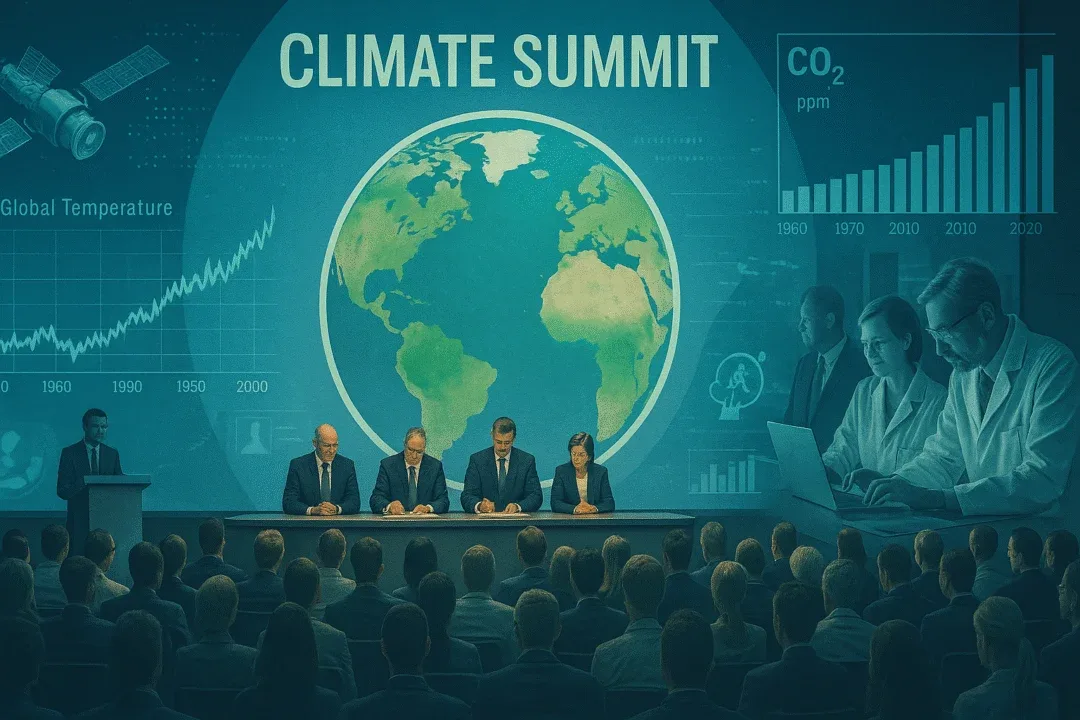
From the 1980s to the early 2000s, the world moved from climate skepticism to scientific consensus and international action. As climate models improved and CO₂ levels continued to rise, the link between greenhouse gas emissions and global warming became undeniable – spurring unprecedented global cooperation.
In 1988, the Intergovernmental Panel on Climate Change (IPCC) was established by the United Nations and the World Meteorological Organization. Its mandate: to assess the latest climate science and provide policy guidance. The IPCC’s first report (1990) confirmed that human activity was contributing to rising global temperatures, marking a scientific turning point in the fight against climate change.
The Rio Earth Summit in 1992 brought climate to the top of the global agenda. Over 170 countries adopted the UN Framework Convention on Climate Change (UNFCCC), laying the groundwork for future treaties. It recognized the principle of “common but differentiated responsibilities,” acknowledging that while all nations must act, developed countries bear a greater share of historical emissions.
The first binding international climate treaty came with the Kyoto Protocol (1997). It committed 37 industrialized countries to reduce greenhouse gas emissions to below 1990 levels during the period 2008–2012. Although the U.S. later withdrew, the protocol marked a significant step in enforcing accountability and quantifying emission targets.
Meanwhile, advances in climate data, satellite monitoring, and carbon cycle modeling reinforced the scientific consensus. The IPCC’s Third Assessment Report (2001) concluded with “high confidence” that global warming was real, human-caused, and accelerating.
Key Milestones in Climate Science and Global Action
Year | Event | Significance |
|---|---|---|
1988 | IPCC founded | Established global scientific authority on climate |
1990 | IPCC First Report | Confirmed human impact on global warming |
1992 | Rio Earth Summit | Created UNFCCC and global framework for climate action |
1997 | Kyoto Protocol adopted | First legally binding emissions reduction treaty |
2001 | IPCC Third Report | Strengthened scientific consensus on human-driven climate change |
This era marked the birth of coordinated climate governance, where science informed diplomacy and nations began crafting shared solutions. It proved that addressing climate change requires not just national efforts – but a global scientific consensus and binding international cooperation.
The Paris Agreement and the SDG Era (2010s–2020s)

The 2010s marked a pivotal shift from climate awareness to formal global commitment, as nations united around legally recognized sustainability goals. At the center of this transformation were the Paris Agreement (2015) and the launch of the United Nations Sustainable Development Goals (SDGs) – two frameworks that redefined global climate ambition.
Adopted at COP21 in Paris, the Paris Agreement brought 196 countries together in a binding commitment to limit global warming to “well below 2°C,” with a stretch target of 1.5°C above pre-industrial levels. Unlike previous treaties, it introduced a flexible model where each country submitted its own Nationally Determined Contributions (NDCs) – customized climate pledges aligned with national capabilities and resources.
Central to the agreement is the principle of net zero emissions, meaning that by the second half of the 21st century, greenhouse gas emissions must be balanced by removals through sinks like forests or carbon capture technologies. Nations also committed to regular progress reviews every five years, known as the Global Stocktake, ensuring ongoing accountability and improvement.
Simultaneously, in 2015, the UN introduced 17 Sustainable Development Goals, with SDG #13: Climate Action focused explicitly on combating climate change and its impacts. The SDGs expanded the environmental agenda to include climate justice, poverty reduction, sustainable energy, and climate-resilient infrastructure – interlinking environmental goals with social and economic development.
Key Features of the Paris Agreement and SDG Era
Framework | Key Elements | Impact |
|---|---|---|
Paris Agreement (2015) | 1.5°C target, NDCs, net zero goal | Legally binding climate framework with global participation |
UN SDGs (2015) | 17 goals; SDG #13 on climate action | Integrated sustainability across environmental, social, and economic sectors |
Net Zero Pledges | By 2050 (most developed nations) | Long-term emissions reduction trajectory |
Global Stocktake | Every 5 years | Mechanism for reviewing climate progress |
This era formalized climate accountability and globalized sustainability efforts, setting the blueprint for long-term action through measurable targets, equity-based cooperation, and cross-sector integration. With over 140 countries now pledging carbon neutrality, the 2010s–2020s cemented the foundation for a sustainable, climate-conscious future.
Youth Activism, Green Tech, and ESG

In the 2020s, the climate movement has been reshaped by a powerful triad: youth activism, green technology innovation, and ESG-driven investment. Together, these forces are transforming both public discourse and private sector behavior – pushing sustainability from the margins into the mainstream.
At the forefront is youth-led activism, exemplified by Greta Thunberg and the Fridays for Future movement. What began as a solitary school strike has evolved into a global climate protest movement involving millions of students across over 100 countries. These activists have reframed climate in terms of intergenerational justice, demanding urgent action from political leaders and exposing inaction through direct, highly visible protests and speeches on global platforms.
Simultaneously, the private sector is experiencing a green tech boom, driven by startups and corporations racing to decarbonize sectors like energy, transport, and agriculture. Companies like Tesla have popularized electric vehicles, while breakthroughs in solar energy, battery storage, carbon capture, and plant-based proteins are accelerating the transition to low-carbon systems. Many of these climate tech startups are supported by a surge in venture capital funding, which exceeded $70 billion globally in 2022 alone.
This innovation wave is tightly linked to the rise of ESG (Environmental, Social, and Governance) investing. ESG principles are now embedded in global finance, with asset managers, pension funds, and institutional investors prioritizing sustainability metrics in their portfolios. According to Bloomberg, ESG-related assets surpassed $35 trillion globally by 2022, influencing corporate strategy, risk assessment, and shareholder expectations.
Key Drivers Reshaping the Climate Future
Force | Example | Impact |
|---|---|---|
Youth Activism | Greta Thunberg, Fridays for Future | Increased public pressure, policy accountability |
Green Tech Innovation | Tesla, solar and battery startups | Scalable solutions for emissions reduction |
ESG Investing | BlackRock, ESG funds | Capital flow toward sustainable businesses |
This convergence of activism, innovation, and finance is disrupting the status quo. It signals a shift from environmental concern to climate leadership across generations and sectors, with youth voices, cutting-edge technologies, and investor capital all aligned toward a shared goal: a livable, sustainable future.
What’s Next in the Timeline of Sustainability?
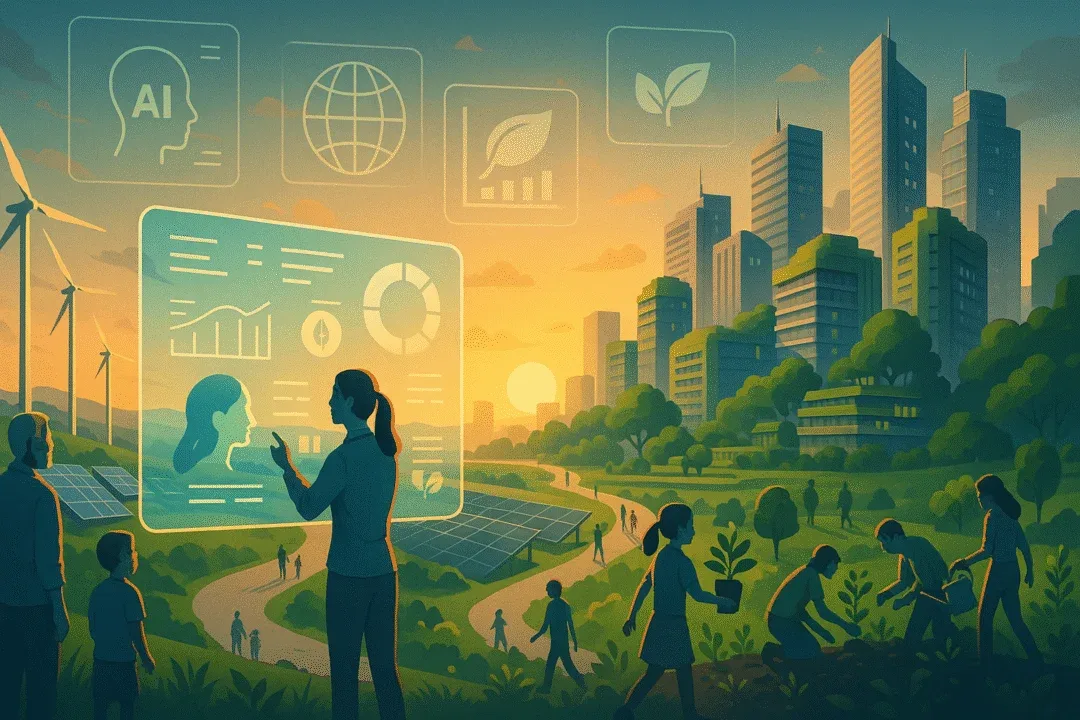
The next phase of sustainability will be defined by the race to reach net-zero emissions, global adaptation to climate impacts, and the integration of advanced technologies like AI to future-proof societies. As we approach critical climate tipping points, the window for meaningful action is narrowing – but the tools and momentum for systemic change are stronger than ever.
At the core of the global roadmap is the net-zero by 2050 target. This means cutting greenhouse gas emissions to as close to zero as possible, with any remaining emissions offset by carbon removal solutions. To stay within the 1.5°C warming threshold, emissions must halve by 2030 and reach net zero by mid-century – requiring unprecedented shifts in energy, transport, industry, and agriculture.
Policy forecasts suggest deeper integration of climate goals into national economies, with more countries likely to implement carbon pricing, fossil fuel phase-outs, and climate risk disclosures. The 2020s will also see increased focus on climate adaptation – strengthening infrastructure, food systems, and water security to withstand rising temperatures, extreme weather, and sea level rise.
On the innovation front, AI and emerging technologies are rapidly expanding sustainability capabilities. AI is now being used for climate modeling, energy grid optimization, supply chain emissions tracking, and even precision agriculture. Combined with data-driven policy and real-time environmental monitoring, these tools will help accelerate progress while enhancing resilience.
Individual engagement also remains critical. Consumer choices, civic participation, and climate education all contribute to shaping markets and policy. Personal carbon footprints, once a niche concern, are now integrated into apps, financial tools, and corporate transparency platforms.
What’s Shaping the Future of Sustainability
Driver | Focus Area | Impact |
|---|---|---|
Net Zero by 2050 | Emissions reduction & carbon removal | Aligns global targets with climate science |
AI for Climate | Modeling, energy, adaptation | Increases efficiency, predictive power |
Policy Evolution | Carbon pricing, green infrastructure | Embeds sustainability into governance |
Resilience Planning | Adaptation and climate-proofing | Reduces vulnerability to future shocks |
Individual Action | Lifestyle, finance, voting | Builds bottom-up pressure for systemic change |
The future of environmentalism is not just about preventing disaster – it’s about building sustainable systems that are resilient, inclusive, and regenerative. What’s next in sustainability depends on global cooperation, rapid innovation, and personal responsibility, all aligned under a single truth: the time to act is now.
FAQ’s
Why does environmental sustainability matter more today?
Environmental sustainability is crucial today due to the urgency of climate change, biodiversity loss, and the narrowing timeline to limit global warming to 1.5°C.
How were ancient civilizations practicing sustainability?
Ancient cultures, including Indigenous communities, practiced sustainability through subsistence farming, forest protection, and ecological reciprocity guided by spiritual and ethical systems.
What environmental damage occurred during industrialization?
The Industrial Revolution caused widespread air and water pollution, deforestation, and species extinction due to unchecked coal use, factory waste, and land exploitation.
What started the conservation movement?
The conservation movement began in the late 1800s, led by figures like John Muir, and focused on protecting wilderness through national parks and nature reserves.
What was the impact of the modern environmental movement?
The 1960s–1980s saw public outcry against pollution, catalyzed by Rachel Carson’s 'Silent Spring', leading to Earth Day, the EPA, and landmark environmental laws.
Which environmental disasters changed policy?
Disasters like Chernobyl, Bhopal, and the Exxon Valdez oil spill led to global treaties and stronger safety regulations including the Montreal Protocol and Oil Pollution Act.
How did global climate cooperation begin?
Global climate cooperation began with the IPCC in 1988, the Rio Earth Summit in 1992, and the Kyoto Protocol in 1997, laying the groundwork for coordinated emissions reduction.
What is the Paris Agreement and how does it relate to the SDGs?
The Paris Agreement (2015) commits countries to limit global warming to 1.5°C. It aligns with SDG #13, promoting climate action through national pledges and net-zero goals.
How are youth activism and ESG reshaping sustainability?
Youth activism, green tech innovation, and ESG investing are driving both public and private climate action by pressuring governments and shifting global capital flows.
What is the future of sustainability?
The future of sustainability centers on achieving net-zero by 2050, scaling climate adaptation, leveraging AI technologies, and fostering resilient, low-carbon systems worldwide.
References and Sources